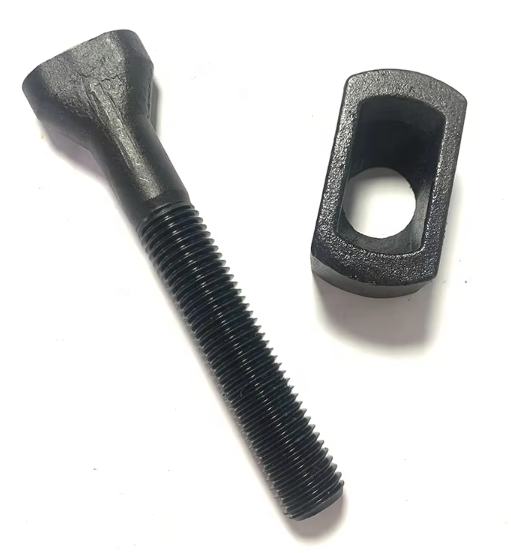
ASTM F3125: The Unified Standard for High Strength Bolts in Structural Applications
Why F3125 Replaced A325 and A490 — Consolidation, Clarity, and Grade Subclassification Logic
The ASTM F3125 standard took over from older specs like A325 and A490 because those had been causing problems for years when it came to specifications, testing methods, and how people applied them in practice. Now under F3125, what used to be separate standards are categorized as different grades instead, which makes things simpler for buying materials, inspecting work sites, and making sure designs meet all necessary requirements. By bringing U.S. bolt standards into line with international norms such as ISO 898-1, this change helps manufacturers work better across borders too. What really matters though is that F3125 creates clear subcategories like F3125/A325 Type 1 or Type 3. These distinctions spell out exactly what kind of materials were used, how they were treated during manufacturing, and where they should go in actual construction projects. This reduces errors when installing bolts in important structures ranging from office buildings to sports arenas and major bridges.
Tensile and Yield Strength Benchmarks: 120/105 ksi (Grade A325) vs. 150/130 ksi (Grade A490)
When it comes to picking structural bolts, tensile and yield strength are still the main factors engineers look at. A325 grade bolts have a minimum tensile strength around 120 ksi and yield strength at about 105 ksi. These specs work well enough for standard building frames and roof trusses, especially when the design needs good ductility and can handle repeated stress over time. Moving up to A490 grade bolts means getting significantly better performance numbers too. They reach 150 ksi for tensile strength and hit 130 ksi on the yield side. Because of this increased capacity, these bolts become necessary in situations where loads are really intense, like in those long span bridges we see today, seismic bracing systems that need to absorb shock, and various heavy-duty industrial structures where failure isn't an option.
| Property | ASTM F3125 Grade A325 | ASTM F3125 Grade A490 |
|---|---|---|
| Tensile Strength | 120 ksi | 150 ksi |
| Yield Strength | 105 ksi | 130 ksi |
| Typical Use Cases | Buildings, stadiums | Bridges, seismic joints, heavy machinery |
Mechanical Property Requirements That Define High Strength Bolts
How Tensile Strength, Yield Ratio, Hardness, and Neck Elongation Ensure Structural Reliability
For high strength bolts to work reliably under all kinds of stress conditions, they need to meet four key mechanical criteria. The first thing to look at is tensile strength, which should be between 120 and 150 ksi to prevent those dreaded brittle fractures. Next up is something called the yield ratio, basically how much the bolt can bend before breaking. According to ASTM F3125 standards, this ratio shouldn't go above 0.92. Why does that matter? Because it gives the bolt enough give before failing, which is super important when buildings shake during earthquakes. Then there's hardness levels around 32 to 39 HRC for most grades. Getting this right means the bolt stays tough on the outside but still flexible inside. If it gets too hard, we risk hydrogen embrittlement problems. Too soft though, and threads start wearing out faster than they should. Lastly, we check neck elongation percentages. For A325 bolts, we want at least 14%, and A490 needs a minimum of 10%. These numbers tell us if the bolt can stretch uniformly along its length and handle twisting forces without snapping suddenly when joints rotate or redistribute loads.
When to Use ASTM A449 Instead of F3125 — Diameter, Thread Length, and Application Exceptions
ASTM A449 still works well for those non-structural jobs or special cases where F3125 doesn't cover things. This includes bigger bolts over 1.5 inches across or ones needing longer threads than what F3125 specifies for bolts six inches or smaller (which follows a 2D plus quarter inch formula). The standard also covers some unusual shapes that come up in actual work situations. Think fully threaded rods, bent bolts, or anchor bolts with forged heads at one end. These kinds of bolts show up all the time in foundations and when mounting heavy machinery. A449 allows hardness levels up to 35 HRC without needing impact tests, but it falls short compared to F3125 in several important ways. There's no strict tracking of lots, no extra tensile tests required, and no mandatory mill certifications needed for structural applications. Because of these differences, engineers simply won't specify A449 for any structural steel connections covered under AISC 360 or the RCSC specs. Those projects demand full F3125 compliance instead.
Complementary Components: Nuts, Washers, and Anchor Systems for High Strength Bolt Assemblies
ASTM A563 and A194 Nuts: Strength Matching, Proof Load Testing, and Avoiding Nut Failure
Choosing the right nuts isn't just something extra - it's actually critical for keeping joints strong and secure. Two main standards come into play here. ASTM A563 deals with regular carbon and alloy steel nuts that work with structural bolts. Then there's ASTM A194, which handles those tough high-strength nuts meant for hot environments, like Grades 2H, 4, and 7 that pair up with A490 bolts in really challenging conditions. These standards all boil down to one basic idea: nuts need to be at least as strong as their matching bolts. Take Grade DH nuts from A563 standard as an example. They're specifically designed so they won't strip out when tightened onto those heavy duty A490 bolts. Every batch has to pass proof load tests too, where we apply 120% of what the nut should handle before showing any sign of giving way. This checks if everything stays stable under pressure and confirms that the threads hold properly together. Using mismatched nuts or ones that don't meet specs opens the door to problems like stress cracks forming, bolts coming loose from vibrations, and joints losing tension over time. Adding hardened flat washers according to ASTM F436 helps spread out the clamping force better across surfaces. Beveled or spherical washers also do wonders for compensating when surfaces aren't perfectly flat on base plates or beam flanges. Speaking of connections, rolled threads have become standard practice for F3125 bolts because they last longer under repeated stress and maintain consistent shape throughout their lifespan compared to cut threads.
Application-Specific Compliance: Bridges, Steel Frames, and Corrosion-Resistant High Strength Bolts
Type 3 Stainless vs. Hot-Dip Galvanized: Selecting Corrosion-Resistant High Strength Bolts by Environment
Engineers need to plan for corrosion resistance instead of hoping it happens by accident. Type 3 stainless steel bolts (ASTM A320 Grade L7) originally designed for cold weather applications have become popular because they stand up against pitting and crevice corrosion in harsh conditions like seawater exposure, chemical processing areas, or places treated with road salt. These bolts form a protective oxide layer naturally, so they don't require regular maintenance and can last many years even in tough environments. That makes them worth the extra money when building things like offshore oil rigs, coastal bridges, or wastewater treatment plants. On the other hand, hot-dip galvanized bolts (ASTM F2329) get their protection from a zinc coating applied after manufacturing. They work well in cities, factories, or rural areas where there isn't too much salt in the air. But watch out for problems when these bolts sit in constant saltwater or acidic soil conditions. The coating can wear away fast, and sometimes it flakes off during installation if the coating is too thick according to specs. For steel structures inside land where inspections happen regularly and bolts can be tightened again, galvanized bolts offer good value for money. When dealing with serious corrosion risks or situations where we're not sure what will happen, many professionals now go with duplex stainless steels like ASTM A193 Grade B8M Class 2 or special coatings that meet ASTM F1160 standards for important connections in structures.
Table of Contents
- ASTM F3125: The Unified Standard for High Strength Bolts in Structural Applications
- Mechanical Property Requirements That Define High Strength Bolts
- Complementary Components: Nuts, Washers, and Anchor Systems for High Strength Bolt Assemblies
- Application-Specific Compliance: Bridges, Steel Frames, and Corrosion-Resistant High Strength Bolts