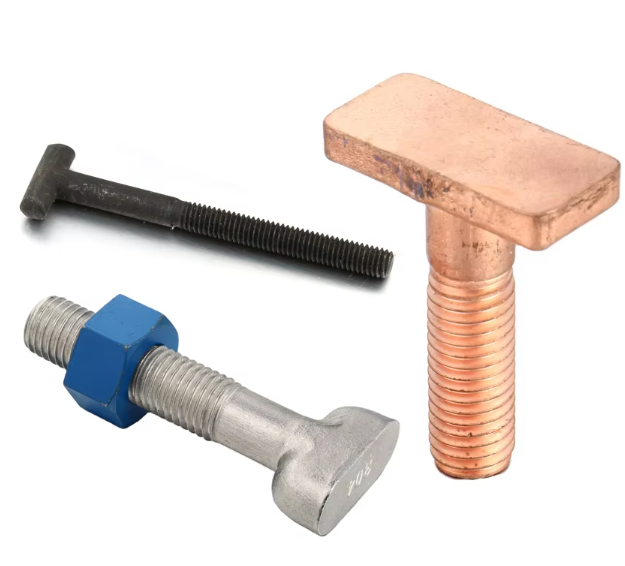
Match T Bolt Dimensions and Head Type to Your T-Slot Track Profile
Properly matching t bolt specifications to your T-slot track is critical for secure installations. A mismatch can lead to instability, material damage, or complete fastener failure during operation.
Aligning T Bolt Width and Head Geometry with Common T-Slot Sizes (5mm, 6mm, 8mm)
- Width compatibility: Bolt width must precisely correspond to slot dimensions. A 6mm T-slot requires a 6mm t bolt for optimal engagement—oversized bolts jam during insertion, while undersized ones shift under load.
- Head geometry: Square heads align most easily with standard T-slots; hexagonal heads may require rotation to seat properly in trapezoidal grooves common in modern aluminum extrusions like 80/20 or Bosch Rexroth systems.
Flanged, Standard, and Swivel-Head T Bolts: Use Cases and Compatibility with Aluminum Extrusion Tracks
- Flanged bolts distribute clamping force across wider surfaces—ideal for brittle acrylic panels, thin composites, or anodized aluminum where localized pressure could cause marring or deformation.
- Standard bolts suit permanent, static installations where adjustability isn’t required—such as fixed machine guards or structural bracing.
- Swivel-head variants support angular adjustments without repositioning the entire assembly—especially valuable in dynamic applications like robotic end-effector mounts or adjustable conveyor supports on modular aluminum tracks.
Mismatched hardware accounts for nearly one-third of structural failures in modular frameworks, per industry field data. Verifying bolt-track compatibility before final assembly prevents costly rework and ensures long-term reliability.
Assess Load Requirements and Fastener Strength for Reliable T Bolt Performance
Proper load assessment ensures your track-mounted systems withstand operational stresses. Matching T bolt specifications to load demands prevents premature failure and costly downtime.
Static vs. Dynamic Loads: Selecting T Bolt Diameter, Thread Length, and Engagement Depth
When dealing with static loads such as fixed shelving or signs that stay put, regular T bolts work fine with about 1 to 1.5 times their diameter in thread engagement. Things get different when we talk about dynamic loads though. Moving equipment, conveyor belts, and robot arms need bolts with deeper threads, roughly 1.5 to 2 times the diameter, bigger overall size, and longer shanks to handle all that movement without breaking down. The vibrations these systems create really put stress on connections. According to industry guidelines, if threads aren't long enough, joints can lose up to forty percent of their strength when subjected to constant shaking and jostling during operation.
Bolt Grade Selection (e.g., 10.9, 12.9) and Thread Features for Vibration Resistance in Industrial T Bolt Applications
For industrial applications where there's some vibration going on, Grade 10.9 bolts with their 1,040 MPa tensile strength work pretty well. Think about things like guards around packaging lines or those lighter duty automation frames we see everywhere these days. When dealing with serious stress points though, nobody really argues with Grade 12.9 bolts at 1,200 MPa. These bad boys hold up in places like CNC machine bases or when building those heavy duty material handling systems that just won't stop moving. The fine thread versions with those little serrations along the sides actually stay put about 30% better than regular coarse threads when everything starts shaking back and forth repeatedly. Getting the torque right matters a lot too. Aim somewhere between 70 to 80% of what the bolt can handle before it yields, otherwise all that clamping power disappears. Some real world testing in aerospace showed how sticking to this method cuts down on failures caused by metal getting tired from constant vibrations.
Choose Corrosion-Resistant T Bolt Materials for Long-Term Durability
Stainless Steel (A2/A4), Zinc-Plated, and Coated T Bolts: Matching Material to Indoor, Outdoor, or Washdown Environments
Choosing the correct materials helps prevent rust problems and makes equipment last longer under different working conditions. Take stainless steel grade A4 (316), for instance. This type stands up well to saltwater, chlorine bleach, and those harsh acidic cleaners commonly used in industrial settings. That's why many boat manufacturers and food processors rely on it for parts exposed to constant washing down. Grade A2 (304) stainless works great too, though mainly indoors or where there's some protection from the elements outdoors. Want something cheaper? Zinc plated bolts handle regular warehouse humidity pretty well in temperature controlled spaces like offices or storage facilities. When dealing with really aggressive chemicals though, like those powerful cleaning solutions or areas filled with solvents, going with epoxy or polymer coated bolts creates a solid shield against damage.
| Material | Best Environment | Key Advantage |
|---|---|---|
| Stainless Steel (A4) | Coastal/chemical | Highest corrosion resistance |
| Zinc-Plated | Indoor/humidity | Cost-effective protection |
| Epoxy-Coated | Chemical washdown | Barrier against aggressive agents |
Corrosion studies show matched material selection reduces replacement frequency by up to 60%. Conversely, unprotected carbon steel bolts in outdoor installations fail three times faster than corrosion-resistant alternatives.
Prioritize Installation Efficiency and Adjustability in T Bolt Selection
Nobody wants to spend hours taking things apart just to rearrange them later. These special T bolts we've been talking about make adjustments so much faster that setup times drop around 70% in those big industrial modular systems. The swivel head design means no tools needed when making angle changes, which saves time during production runs. And these bolts come with built-in flange shapes that actually cut down on extra washers something that really matters in places like packaging facilities where they need to switch formats every single hour. Looking at actual field reports, workers can get conveyor supports back in place within just 11 minutes when using these slotted track compatible bolts instead of the old fashioned ones that take nearly half an hour to fix properly.
T bolts that come pre-calibrated with standard torque settings help avoid those frustrating inconsistencies when tightening components, and they deliver performance that stays consistent over time. For systems that need to be moved around often, tension control designs really shine because they keep the clamping force steady even after multiple adjustments. Regular hex bolts just don't cut it here since they almost always need to be retorqued every time something gets shifted. The low clearance heads on these specialized bolts take up about 40% less space for wrenching work while still holding strong against pull out forces, which makes them absolutely essential for jobs where access is limited. And let's not forget about cleanrooms and laboratory settings where surface integrity matters most. Nylon tipped versions are available specifically for these situations, allowing technicians to make precise adjustments through friction alone without worrying about scratching up those delicate anodized finishes or ruining protective coatings on tracks.
When it comes to getting work done faster, tooling efficiency really makes a difference. Magnetic drivers can slash installation time by around 30% compared to doing things manually. And when companies standardize on specific drive types like Torx or Allen across their entire hardware inventory, workers spend way less time swapping out bits between projects. Looking at ergonomic designs actually works wonders too. We've seen real world results where people working on big installations like trade show booths report feeling 22% less tired after a full day's work. The bottom line is simple enough. Choosing the correct T-bolt isn't just about making connections stronger, it's about turning what would otherwise be fixed structures into something that can grow and change as needed. Think about expanding storage solutions in warehouses or even creating prototypes for new medical devices where flexibility matters most.