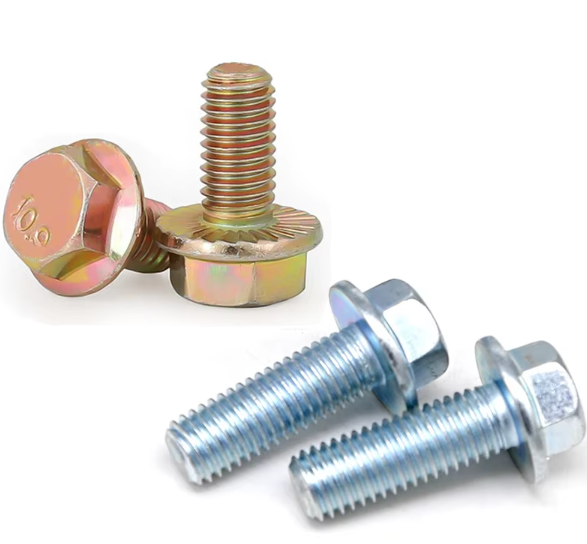
How Flange Bolt Clamping Force Determines Sealing Performance
The Physics of Gasket Seating: Why Minimum Bolt Load Is Non-Negotiable
Getting a good flange seal starts with making sure we apply enough clamping force using properly tightened bolts. When we tighten those bolts down, they squeeze the gasket material between the two flange surfaces. This compression fills in all those tiny surface bumps and creates that first line of defense against leaks. The amount of force needs to beat out both the pressure pushing the flanges apart from inside and also counteract how much the gasket naturally wants to relax back after being compressed. Most problems come from not tightening enough – studies show around 73% of all leaks happen because the gasket wasn't compressed properly. Different gaskets require different amounts of force depending on their design and what pressure they'll face. For example, spiral wound gaskets generally need about half again as much compression compared to solid metal ring gaskets if we want to stop fluids from seeping through. What really matters though is maintaining that clamping force over time. Just getting it right when installing isn't enough. The seal has to keep holding up even as temperatures change and pressures fluctuate during normal operation.
Torque Over- or Under-Application: Real-World Leak Causes per API RP 14E and ASME PCC-1
Torque deviation is a primary driver of field leaks, with 68% traced to applications falling outside ±15% of specified values. API RP 14E and ASME PCC-1 identify three critical failure modes:
| Error Type | Consequence | Prevention Standard |
|---|---|---|
| Under-torque | Incomplete gasket seating and interface leakage | ASME PCC-1 torque sequence tables |
| Over-torque | Gasket crushing, bolt yielding, and up to 60% clamp load loss during thermal cycling | API RP 14E load limits |
| Uneven tightening | Flange warpage and non-uniform stress distribution | Cross-pattern tightening protocols |
Both standards mandate calibrated tools and certified personnel to achieve target loads within a strict 5% tolerance—recognizing that precision in torque application is inseparable from sealing reliability.
Selecting the Right Flange Bolt Grade for Pipeline Service Conditions
ASTM A193 B7, B16, L7, and B8M: Matching Strength, Corrosion Resistance, and Thermal Stability to Operating Environment
Choosing the right bolt material makes all the difference when it comes to how joints perform over time. Take ASTM A193 B7 alloy steel for example it has impressive 125 ksi tensile strength great for high pressure applications but starts to break down once temperatures go past 400 degrees Celsius and doesn't handle corrosion very well either. Sour gas environments present different challenges altogether. Here, ASTM A193 L7 bolts with their tempered martensitic structure actually stand up better against sulfide stress cracking problems. Offshore operations dealing with lots of chlorides need something else entirely. B8M stainless steel works wonders because of the molybdenum content that stops those pesky pits from forming. Thermal cycling situations like what we see in refineries call for B16 bolts instead. These maintain about 17 percent more clamp load compared to B7 at around 550 degrees Celsius according to ASME standards from 2022. Industry data shows something alarming too NACE corrosion reports point to roughly 42% of sealing issues coming from using wrong grade bolts. We've seen cases where people put regular carbon steel bolts into acidic flow paths and ended up with serious hydrogen embrittlement problems down the road.
Flange Bolt Geometry and Configuration: Ensuring Uniform Load Distribution
Stud Bolts vs. Tap Bolts vs. Double-Nutted Assemblies—Impact on Repeatability and High-Cycle Integrity
The shape of bolts plays a big role in how well clamping force spreads across gaskets. Stud bolts, those threaded on both ends, allow for more even tension distribution and help keep stress from building up at the flange connection points. Tap bolts tell a different story though they tend to create uneven loading patterns which can lead to spots where the gasket gets compressed too much or deforms improperly. When dealing with equipment that goes through many cycles, double nuts make all the difference because they prevent thread slippage as temperatures change during operation. According to industry standard ASME PCC-1, when using stud bolts along with proper tightening sequence, load variations drop below 15%. That's a significant improvement over tap bolt systems where variations typically range from 25 to 40%. Going bigger with larger diameter bolts helps spread out pressure more evenly, and longer studs stand up better to repeated stress cycles something really important for joints that need to handle over 500 pressure cycles regularly.
Compliance-Driven Flange Bolt Sizing: ASME B16.5 Class, Size, and Grade Requirements
ASME B16.5 standards aren't just suggestions they're basically requirements when it comes to ensuring safe operations without leaks. The standard covers three main factors that can't be ignored: pressure rating (class), dimensions (size and length), and material strength (grade). Take for instance a Class 300 flange operating under 500 pounds per square inch at around 400 degrees Fahrenheit. This setup needs much stronger bolts compared to what would work for a Class 150 version. When components don't meet these specifications properly, things get problematic fast. Uneven pressure distribution happens, which according to some recent industry reports accounts for roughly 37% of all pipeline leaks. That's why good engineers always check those three key numbers together before making any decisions about equipment selection and installation.
- Class requirements: Pressure-temperature ratings dictating minimum bolt strength
- Size specifications: Diameter/length combinations ensuring full thread engagement and adequate stretch
- Grade compatibility: Material certifications (e.g., ASTM A193) aligned with corrosion, temperature, and mechanical demands
The tripartite sealing approach looks at bolts, gaskets and flanges together as parts of one big system where problems with any single piece can bring down the whole setup. New software tools for calculating bolt sizes now come with built-in ASME B16.5 data so workers don't have to do those calculations by hand anymore. Field technicians report around 23% fewer fitting issues since these digital solutions became available back in 2022. And remember to check what version standards apply right now because there were important changes to high temp alloys just last year in 2021 that many folks still aren't aware of when they're working on installations.
The Tripartite Sealing System: Why Flange Bolt Selection Must Align with Gasket and Flange Design
Pipeline integrity rests on the synchronized performance of flanges, gaskets, and bolts. Mismatches among these components are a root cause of catastrophic joint failure. Spiral-wound gaskets, for example, require 30–50% lower bolt loads than RTJ gaskets to seat properly without damaging the metal windings—per ASME B16.20 guidelines.
Spiral-Wound vs. RTJ Gaskets: How Gasket Type Dictates Required Flange Bolt Load and Yield Margin
Spiral wound gaskets work by compressing flexible materials like graphite inside metal coils. These gaskets perform best when compressed between about 15 thousand to 30 thousand pounds per square inch. That range is just right for creating a good seal while still keeping the material elastic enough to maintain its properties over time. Most spiral wound designs handle temperature changes pretty well, usually bouncing back around 15 percent after expansion and contraction cycles. RTJ gaskets are different though. They require much higher pressure because they actually deform soft metals such as aluminum or mild steel into the grooves of the flanges. This needs at least 40 thousand psi from the bolts holding everything together. What happens here is the creation of a permanent metal contact seal that doesn't recover at all. The downside? If those bolts get stretched beyond their limits, the whole system becomes susceptible to warping and failure down the line.
| Gasket Type | Target Bolt Load (psi) | Critical Risk | Thermal Cycling Tolerance |
|---|---|---|---|
| Spiral-Wound | 15,000–30,000 | Under-compression leaks | High |
| RTJ | 40,000+ | Flange distortion | Low |
Bolt selection must reflect this fundamental difference: spiral-wound systems benefit from bolts with higher elasticity to sustain load during thermal shifts; RTJ systems demand high-yield-strength bolts capable of maintaining extreme deformation pressures. Per ASME B31.3 case studies, mismatches account for 23% of sealing failures in high-pressure pipelines.
Table of Contents
- How Flange Bolt Clamping Force Determines Sealing Performance
- Selecting the Right Flange Bolt Grade for Pipeline Service Conditions
- Flange Bolt Geometry and Configuration: Ensuring Uniform Load Distribution
- Compliance-Driven Flange Bolt Sizing: ASME B16.5 Class, Size, and Grade Requirements
- The Tripartite Sealing System: Why Flange Bolt Selection Must Align with Gasket and Flange Design