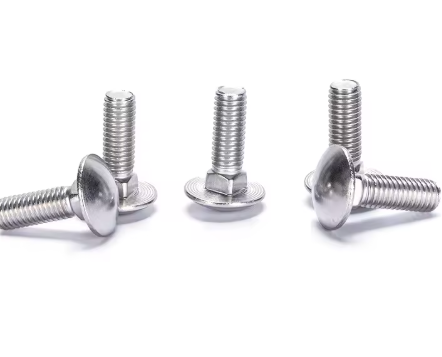
Carriage Bolt Anatomy: Why Design Features Matter in Wood
Head, square neck, and shank: how each prevents rotation and resists pull-out in timber
Carriage bolts have those rounded heads that spread out pressure pretty evenly on wooden surfaces, which helps prevent those annoying dents in specific spots. Plus, their smooth shape means they won't catch on anything as you work with them. Just below the head sits this square section that digs right into the wood around a pre-drilled hole. When tightened, this creates lots of friction against rotation so the nut stays put instead of spinning loose. What makes these bolts special is the part without threads running through the middle of the wood. This keeps the whole cross section intact, giving much better resistance against sideways forces and making them hold much tighter than regular threaded screws would. Because of how they handle compression issues and weak points in wood grains, these bolts are actually pretty good choices for connecting structural timbers together in construction projects.
Why square neck engagement is critical for wood-to-wood connections
Square neck fasteners work best when installed in wood because their sharp corners bite into the softer wood fibers, creating a secure hold that just won't happen with metal materials. When used on metal surfaces, these square necks tend to slide around instead of staying put, so they don't really offer any resistance against rotation. The way they grip into wood actually helps deal with those annoying seasonal changes we see in timber all year round. As wood expands and contracts with different humidity levels, the embedded square neck maintains good clamping pressure without needing constant adjustments. Plus, this design lets carpenters install them from one side only (just the nut end is needed), which comes in handy for many timber framing projects where getting at both sides of a bolt simply isn't possible once everything gets assembled.
Sizing a Carriage Bolt for Timber: Diameter, Length, and Load Alignment
Selecting diameter based on wood species, thickness, and structural load requirements
When choosing carriage bolt sizes, there's a delicate balance between what the wood can handle and what the job actually needs. For softer woods like pine or cedar, bigger is better really. These materials just don't stand up well to stress, so going with at least half inch bolts helps avoid problems with the wood getting crushed or pulling out when weight is applied. The density simply isn't there compared to harder woods. On the flip side, oak and maple can get away with smaller bolts around quarter to five eighths of an inch for lighter work. But when talking about structural stuff, we're looking at different requirements altogether. Connections between decks and house frames or those big timber supports need substantial hardware. Most professionals will reach for five eighths to three quarters inch bolts for these applications since they need to hold up against continuous loads often over 500 pounds. Never rely on quick fixes or old school rules of thumb though. Proper engineering calculations are essential if we want our joints to stay safe and perform reliably year after year.
Calculating optimal length: accounting for wood depth, washer, nut, and thread engagement
Getting the right length for a carriage bolt means adding up several things: how thick the wood is altogether, plus the washer thickness, the height of the nut, and enough threads sticking out. Start by measuring exactly how deep all those pieces of wood are together. Most washers and nuts take about 1/8 inch each, so factor that in. Also remember to leave at least one full diameter worth of threads showing on the end. For instance, if working with a half inch bolt, there should be around half an inch of exposed threading. Not getting enough thread engagement can strip the threads completely, while bolts that stick out too far just hang there doing nothing useful and actually weaken the connection because they shorten the part of the bolt that bears weight. Take a typical situation where someone has two inches of wood stacked up. A good rule of thumb would be going with a bolt about 2.5 inches long. That gives plenty of shank going through the wood, lets the nut sit properly against the washer, and makes sure there's enough thread grabbing power when everything gets tightened down.
Proper Installation of Carriage Bolts in Wood to Prevent Splitting and Ensure Long-Term Integrity
Pre-drilling essentials: bit size, depth, grain alignment, and pilot hole tapering
Getting good results with carriage bolts in wood means pre-drilling is absolutely essential. The drill bit should be just slightly smaller than the bolt shank diameter something like 1/64 inch difference works well. This allows the square neck to sit properly without splitting the wood. The depth needs to match how long the unthreaded part of the bolt is, minus whatever space the washer and nut will take up so all those threads actually engage inside the nut. Keep those holes running straight along the wood grain direction. Drilling at an angle or across the grain creates problems with tear out and weakens how strong the bolt holds. For tough woods like oak, maple, or hickory, it helps to flare out the end of that pilot hole a bit. This lets pressure escape internally and stops the wood from blowing out at the surface. Studies show that when done right with proper square neck seating, careful pre-drilling can boost pull out resistance by around 40% based on tests conducted by the American Wood Council.
Material and Finish Selection for Carriage Bolts in Wood Structures
Hot-dip galvanized vs. stainless steel carriage bolts: corrosion resistance in outdoor/humid applications
The environment really determines what kind of finish makes sense for bolts—not just what looks good. Hot dip galvanized bolts have this thick zinc coating that bonds with the metal underneath. When exposed to elements like rain or freshwater, the zinc actually corrodes first before reaching the steel itself. That's why these work great for things like deck installations, pergola construction, and fence posts around the house. Stainless steel options like ASTM A193 B8M (grade 316) or A193 B8 (grade 304) protect against harsher conditions thanks to their chromium oxide layer. These can stand up better to saltwater spray, chlorinated pools, and even industrial chemicals. For regular backyard projects where budget matters, hot dip galvanizing still gives excellent protection. But when building near oceans, around swimming pools, or anywhere de-icing salts might be used, stainless steel becomes the smarter investment. And don't forget something important: always use matching washers and nuts with your bolts. Mixing different metals without proper isolation leads to galvanic corrosion, which causes fasteners to fail way sooner than they should in many mixed material setups.
FAQ
What is the primary purpose of a carriage bolt in wood?
The primary purpose of a carriage bolt in wood is to provide a strong, secure connection by preventing rotation and offering resistance to pull-out forces, largely due to its round head and square neck design.
Why does the square neck of a carriage bolt work better in wood than metal?
The square neck works better in wood because its sharp corners bite into the softer wood fibers, securing the bolt in place, whereas in metal, the neck tends to slide and does not prevent rotation effectively.
How does pre-drilling benefit carriage bolt installation in wood?
Pre-drilling ensures that the carriage bolt's square neck sits properly without splitting the wood, enhancing the bolt's hold and increasing resistance to pull-out forces.
When should stainless steel carriage bolts be used over galvanized ones?
Stainless steel carriage bolts should be used in environments exposed to harsh conditions such as saltwater, chlorinated pools, or areas with de-icing salts, whereas galvanized bolts are suitable for milder environments.