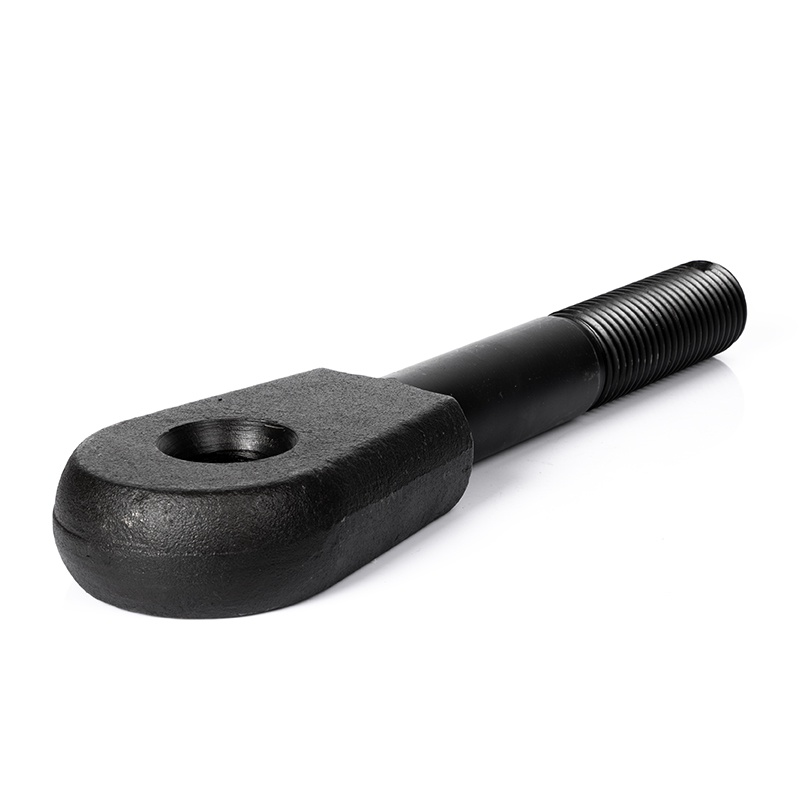
High Strength Bolts in Structural Steel Framing for Heavy-Duty Construction
Why conventional bolts fail under extreme static loads in skyscrapers and industrial plants
Regular bolts just aren't built to handle those massive static loads we see in serious construction projects. Most standard fasteners start to give way around 250 to 400 MPa, which is way short of what's needed for those huge structural components in skyscrapers or big industrial buildings where requirements hit 500 MPa and beyond. When pushed past their limits, these bolts deform permanently and eventually snap off completely. Looking at recent structural failure reports from last year shows a worrying trend: more than half of all joint failures in steel structures actually come down to bolt shear fractures when the load keeps coming, especially in those vital connection points between beams and columns. That's why engineers specify high strength bolts instead. These specialized fasteners are made from better materials and go through precise heat treatment processes during manufacturing, giving them the extra strength needed to hold everything together safely under real world conditions.
How ASTM A325/A490 and ISO 898-1 Grade 10.9 specifications deliver 690 MPa yield strength for reliable load transfer
ASTM A325/A490 and ISO 898-1 Grade 10.9 bolts achieve minimum yield strengths of 690–940 MPa via quench-and-temper heat treatment of medium-carbon alloy steel. This process produces a tempered martensite microstructure that resists deformation at stress concentrations. Key advantages include:
- Controlled hardness, balancing ductility and resistance to brittle fracture
- Precise preload calibration, enabling consistent clamping force using turn-of-nut installation
- Enhanced shear resistance, withstanding cyclic loading up to three times longer than Grade 8.8 equivalents
All bolts must pass proof load testing at 120% of specified yield strength—a requirement that ensures robust safety margins in moment frames, bracing systems, and other critical connections.
High Strength Bolts in Seismic-Resistant Design and Slip-Critical Connections
Preventing joint slippage and fatigue under cyclic earthquake loading
During earthquakes, buildings experience these back and forth forces that gradually work their way into standard bolted joints, causing them to slowly come loose over time from something called cyclic ratcheting. What happens next is pretty concerning too. As these joints start slipping around, they create little cracks right where the stress builds up most, which weakens the whole structure after each earthquake hits again. That's why engineers turn to those special high strength bolts. These bolts hold their grip much better when things shake because they can handle all that repeated pushing and pulling. We're talking about bolts with at least 690 MPa yield strength here, which gives them real staying power against those stressful reversals that would make cheaper fasteners fail faster. Tests on full size structures show that buildings using these slip critical connections actually move back to their original position 40 percent more completely after an earthquake compared to regular joints (according to NEHRP research from 2023). This makes a huge difference in areas prone to frequent quakes where construction needs to survive hundreds of these shaking episodes without any major joint failures.
The role of controlled tensile preload (70%) and surface friction in AISC 360-22 slip-critical high strength bolted joints
According to AISC 360-22 standards, slip critical connections need at least 70 percent tensile preload so the bolt tension actually creates friction between surfaces. When using Grade 10.9 bolts specifically, these requirements result in clamping forces well over 200 kilonewtons. The friction coefficient ranges from about 0.33 to 0.5 when working with blast cleaned surfaces. What does all this mean practically? Well, the friction created stops any movement between the parts being joined together. Tests done on shake tables have shown this works really well too. Properly tightened joints didn't slip even when subjected to ground accelerations reaching 0.4g according to research published by FEMA in their P-1052 document back in 2021. Getting good results from these connections isn't just about following specs though. There are several other factors engineers must consider during installation as well.
- Surface preparation meeting RCSC Class A or B coating standards
- Installation via turn-of-nut or calibrated wrench methods to ensure accurate preload
- Use of duplex-treated washers to minimize embedment relaxation
This approach directs seismic energy dissipation into controlled yielding of structural elements—not joint failure.
High Strength Bolts in Dynamic Infrastructure: Bridges and Transportation Systems
Mitigating fatigue cracking in orthotropic decks and expansion joints under repetitive axle loading
The orthotropic bridge deck along with expansion joints faces massive stress every day from all those heavy trucks passing through. These constant pressure waves actually kick off tiny cracks in regular fasteners over time. That's where high strength bolts come into play. They spread out the weight across a larger area instead of letting it concentrate on single spots. What this means is less chance of those pesky fatigue cracks forming at critical connection points. Plus, these bolts maintain their grip even after years of going through the same motion again and again. This keeps everything aligned properly and maintains structural rigidity. As a result, bridges last much longer before needing major repairs, especially important for busy highways where traffic never stops flowing.
U.S. DOT's shift to ASTM F3125 Grade 10.9 bolts with improved low-temperature notch toughness for long-span bridges
The US Department of Transportation has started requiring ASTM F3125 Grade 10.9 bolts for big bridge construction work across the country. What makes these bolts special? Well, they have at least 1040 MPa tensile strength, but what's really important is their improved performance when temperatures drop. The way these bolts are made helps prevent them from cracking unexpectedly in freezing weather conditions or after repeated temperature changes. That's why engineers prefer them for those massive span bridges, bridge expansions, and even seismic isolation systems where all sorts of complicated forces come into play over time.
High Strength Bolts in Corrosive and High-Risk Environments: Offshore and Renewable Energy
Combating stress corrosion cracking (SCC) in submerged, cyclically loaded offshore flanges
When saltwater gets mixed with those constant waves pounding against them, offshore bolted flanges face serious risks from something called Stress Corrosion Cracking, or SCC for short. A recent report from NACE International back in 2023 actually found that SCC was responsible for nearly half (around 42%) of all bolt failures down there on the ocean floor. That's pretty alarming when you think about it. Fortunately, there's hope in the form of ASTM A193 B7M bolts. These special bolts are made from an alloy that's been carefully balanced to stand up against hydrogen embrittlement and those pesky cracks caused by chlorides. Even when the tides go up and down constantly putting pressure on everything, these bolts hold their ground better than standard alternatives.
Integrated protection strategies: ASTM A193 B7M bolts, duplex stainless steel washers, and cathodic protection
A three-layer defense system ensures long-term reliability in aggressive marine environments:
- Material selection: ASTM A193 B7M bolts provide 100 ksi (690 MPa) minimum tensile strength and SCC resistance
- Barrier enhancement: Duplex stainless steel washers eliminate galvanic coupling between bolt and base metal
- Electrochemical control: Sacrificial anodes provide cathodic protection, reducing corrosion rates by up to 90% when properly maintained
Together, these measures extend service life beyond 25 years in tidal zones—supporting structural integrity in offshore wind farms and other renewable energy infrastructure.
FAQ
What are the specifications of high-strength bolts?
High-strength bolts typically adhere to specifications such as ASTM A325/A490 or ISO 898-1 Grade 10.9, which ensure yield strengths ranging from 690 to 940 MPa.
Why are high-strength bolts preferred in seismic-resistant designs?
High-strength bolts are preferred because they prevent joint slippage and fatigue under cyclic earthquake loading, maintaining structural integrity even during seismic events.
How do high-strength bolts help in dynamic infrastructures like bridges?
In dynamic infrastructures, high-strength bolts spread the load and mitigate fatigue cracking, prolonging the service life of structures like bridges.
How do high-strength bolts resist corrosion in offshore environments?
High-strength bolts in offshore applications utilize materials and strategies like ASTM A193 B7M bolts and cathodic protection to resist stress corrosion cracking.
Table of Contents
- High Strength Bolts in Structural Steel Framing for Heavy-Duty Construction
- High Strength Bolts in Seismic-Resistant Design and Slip-Critical Connections
- High Strength Bolts in Dynamic Infrastructure: Bridges and Transportation Systems
- High Strength Bolts in Corrosive and High-Risk Environments: Offshore and Renewable Energy
- FAQ