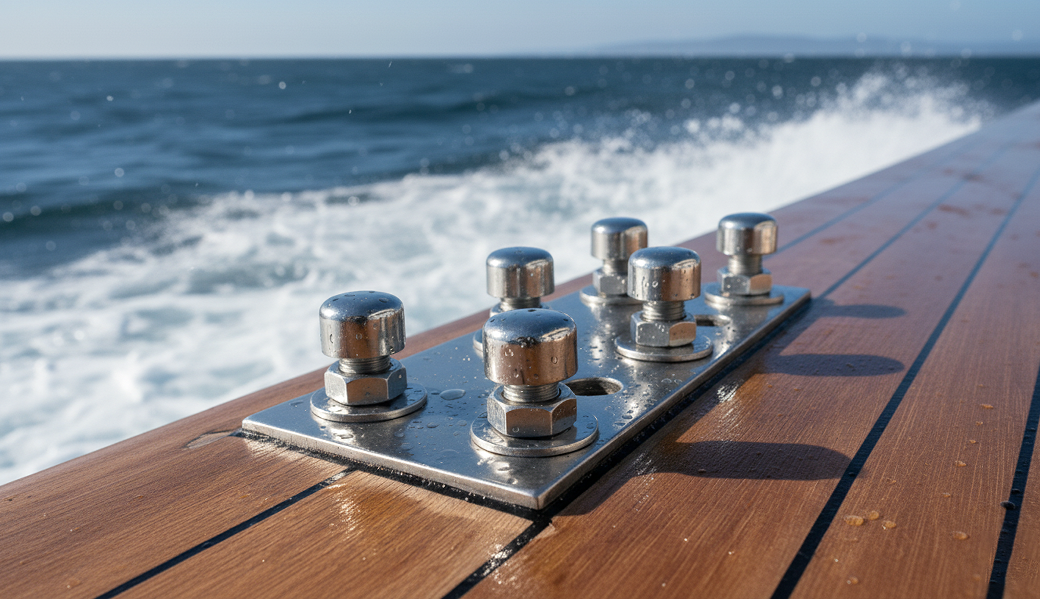
Why 316 Stainless Steel Excels in Marine Corrosion Resistance
Grade 316 stainless steel bolts beat regular 304 versions because they contain around 2 to 3 percent molybdenum in the mix. What does this mean? Well, molybdenum helps protect against chlorides by keeping the chromium oxide layer stable on the surface, which stops those annoying pits and cracks from forming over time. According to some research published last year in Marine Materials Journal, parts made from 316 can last anywhere from three to five times longer when subjected to salt spray testing compared to standard 304 materials. That's why engineers often specify Grade 316 for underwater installations or areas where seawater regularly splashes onto equipment. Most industry insiders will tell anyone who asks that molybdenum plays a crucial role here since it blocks those pesky chloride ions from getting into the metal, something that matters a lot in places affected by tides and ocean conditions.
Key Factors Influencing Fastener Degradation in Seawater
Four primary elements accelerate stainless steel bolt corrosion in marine environments:
- Chloride concentration: Seawater contains 19,000–35,000 ppm chlorides that penetrate passive layers
- Temperature: Corrosion rates double for every 10°C increase in water temperature
- Oxygen levels: Fully submerged bolts corrode slower than those in tidal zones with alternating wet/dry cycles
- Galvanic pairs: Contact with less noble metals like aluminum creates destructive electrochemical cells
These variables interact dynamically—especially in splash zones where oxygen replenishment and salt accumulation combine to intensify localized corrosion.
The Impact of Saltwater Exposure on Stainless Steel Bolts
Prolonged saltwater exposure triggers two degradation mechanisms in stainless steel bolts:
- Pitting corrosion: Chlorides locally breach the oxide layer, creating subsurface cavities
- Crevice corrosion: Stagnant water in threaded areas creates acidic microenvironments
Research indicates 316 stainless steel withstands 10–15 years in moderate marine conditions before significant pitting occurs, versus 3–5 years for 304 grades (Corrosion Science 2023). Regular rinsing with fresh water and using compatible isolation materials can extend service life by 30–40%.
Comparing Stainless Steel Grades: Why 316 Outperforms 304 and Other Alloys
304 vs. 316 Stainless Steel: Key Differences for Marine Use
When deciding between 304 and 316 stainless steel bolts, what really matters is how well they stand up to corrosion at sea. Both types have similar amounts of chromium around 18 to 20 percent and nickel about 8 to 12 percent but there's something special about 316. It adds 2 to 3 percent molybdenum which makes all the difference when these bolts are exposed to environments rich in chlorides. Research into marine corrosion has found that 316 bolts pit roughly 30 percent less than 304 counterparts during those saltwater tests according to AISI research last year. For anyone working near salt water this kind of difference can mean the difference between replacement costs and long term reliability.
Role of Molybdenum in Enhancing Chloride and Saltwater Resistance
Molybdenum improves the stability of the passive oxide layer, increasing resistance to chloride-induced breakdown. For every 1% increase in molybdenum content, chloride threshold resistance improves by approximately ~250 ppm, making 316 ideal for tidal zones and offshore structures exposed to splashing seawater.
Compositional and Mechanical Properties of Grade 316 vs. Alternatives
Marine grade 316 stainless steel bolts not only resist corrosion better but also have much higher tensile strength around 620 MPa or more plus better elongation properties when compared to other options such as 304 or 430 ferritic alloys. The unique austenitic structure these bolts possess helps them stay stable even when temperatures change constantly, which cuts down on those annoying stress corrosion cracks we often see in saltwater conditions. Field tests show that 316 bolts can last anywhere from 15 to maybe 20 years underwater before showing signs of wear, while standard 304 bolts typically need replacing three times faster under similar conditions. For anyone working on boats or coastal structures, this longevity makes all the difference in maintenance costs over time.
What Defines Marine Grade Stainless Steel Bolts?
Stainless steel bolts rated for marine use are built to survive harsh saltwater conditions. They need just the right mix of metals during production to handle these tough environments. For something to count as truly marine grade, it generally has between 16 and 18 percent chromium plus around 2 to 3 percent molybdenum in its makeup. The molybdenum part is really important because it helps fight off those pesky pits that form when chloride ions attack the metal. After manufacturing, these bolts get treated through a process called passivation. This creates this protective chromium oxide coating on their surfaces. Interestingly enough, this layer can actually repair itself if damaged slightly, which marine corrosion experts have written about extensively in various research papers over the years.
Characteristics that qualify a bolt as 'marine-grade'
- Alloy composition: Nickel (10–14%) improves ductility; manganese enhances workability
- Certifications: Compliance with ASTM A193/A193M or ISO 3506-2 standards
- Surface quality: Smooth finish (Ra ≤ 3.2 µm) to minimize crevice corrosion risks
Critical performance traits of marine-grade stainless steel bolts
- Stress corrosion cracking resistance: Withstands >500 hours in salt spray tests (ASTM B117)
- Mechanical strength: Maintains 70,000–100,000 psi tensile strength even after 5+ years in tidal zones
- Galvanic compatibility: Electrochemical potential within −0.5V to +0.5V vs SCE to prevent galvanic coupling
Independent material analysis reports confirm grade 316 marine bolts retain 92% of their original shear strength after decade-long seawater exposure, outperforming standard 304 variants by 300% in corrosion resistance.
Preventing Galvanic Corrosion with Proper Material Compatibility
How galvanic corrosion affects stainless steel bolts in mixed-metal assemblies
Stainless steel bolts used alongside other metals such as aluminum or carbon steel in boat parts often lead to problems with galvanic corrosion that wears down metal parts pretty quickly. The basic science behind this involves three main factors working together metals that have different electrical properties, actual physical touching between them, plus some kind of conductive liquid like seawater. What happens is that stainless steel tends to become what engineers call a cathode, which actually speeds up how fast the less noble metals around it corrode away. Studies indicate that aluminum pieces located close to those 316 stainless steel fasteners might start showing signs of wear 3 to 5 times quicker when they're constantly underwater than if they were standing alone. Things get even worse in areas where waves keep splashing salt water onto surfaces because the constant wetting keeps feeding fresh electrolyte into the system.
Best practices for preventing electrochemical degradation in marine environments
To mitigate galvanic corrosion in saltwater applications:
- Select metals within 0.15V on the galvanic series, as recommended by industry guidelines
- Apply dielectric barriers like nylon washers or PTFE tape between dissimilar metals
- Use zinc-rich coatings on sacrificial components to create controlled corrosion paths
- Design assemblies to avoid crevices where saltwater can pool
- Implement cathodic protection systems for critical offshore structures
Proactive material pairing reduces corrosion rates by up to 85% compared to unmanaged combinations, based on electrochemical compatibility testing.
Standards and Real-World Applications of Stainless Steel Bolts at Sea
Relevant standards: ISO 3506-1 and ISO 3506-2 for marine fasteners
For marine applications, stainless steel bolts need to meet ISO 3506-1 and ISO 3506-2 requirements. These international standards set out what makes stainless steel suitable for harsh saltwater conditions. Grade 316 specifically needs at least 500 MPa tensile strength and around 40% elongation to handle all that oceanic stress from tides and constant salt exposure. Real world testing back in 2023 found something interesting too. Parts that actually met these specs lasted way longer underwater. The numbers were pretty impressive really, about 70% fewer failures after five years sitting in seawater compared to cheaper options that don't carry those ratings. Makes sense when you think about it though. Saltwater is brutal on metal over time.
Applications in boatbuilding, docks, and offshore structures
Ship hull fasteners and offshore oil rig tensioning systems all depend on 316 stainless steel bolts when there's constant saltwater around. These bolts hold up dock bollards along coastlines that face about 8 to 10 kN of force repeatedly as tides come and go. Down deeper, marine engineers count on them too for connecting subsea pipelines where water pressure gets serious beyond 200 meters below sea level. When properly treated through passivation, 316 bolts resist pitting damage from seawater chlorides roughly 12 to 15 times better than regular old 304 stainless options. That kind of protection matters a lot out at sea where replacing corroded hardware can cost thousands and disrupt operations for days.
Table of Contents
- Why 316 Stainless Steel Excels in Marine Corrosion Resistance
- Comparing Stainless Steel Grades: Why 316 Outperforms 304 and Other Alloys
- What Defines Marine Grade Stainless Steel Bolts?
- Preventing Galvanic Corrosion with Proper Material Compatibility
- Standards and Real-World Applications of Stainless Steel Bolts at Sea