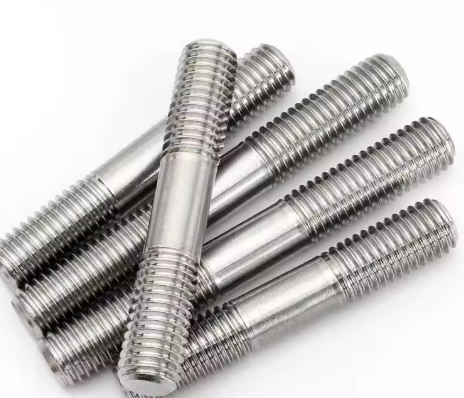
Why Stud Bolt Preload Is Critical for Flange Joint Integrity
Sealing Mechanics: How Gasket Compression Depends on Consistent Stud Bolt Preload
The whole thing with gaskets comes down to getting even pressure across those flange faces, which happens when the stud bolts are tightened just right. If there's not enough tension, tiny gaps form and leaks happen. But go too far and the gasket gets squashed or pushed out of place entirely. Studies show keeping the bolt tension under around 80% of what the bolt can actually handle before breaking gives the best seal without wrecking the bolts themselves (this was found in CJME back in 2020). For those ASME B16.5 flanges specifically, they work their best magic when everything stays within certain limits that manufacturers specify for good reason.
| Factor | Optimal Range |
|---|---|
| Preload % | 65–75% of yield strength |
| Gasket Compression | 25–40% of total deflection |
| This balance eliminates molecular flow between gasket surfaces without inducing permanent deformation—ensuring both initial seal integrity and long-term resilience. |
Failure Modes Explained: Over-Torquing vs. Under-Preloading in Real-World Flanged Systems
Two dominant failure modes compromise flange joint reliability:
Over-torquing
Exceeding bolt yield strength initiates plastic deformation, reducing fatigue resistance by up to 60% (CJME 2020). Consequences include thread galling and flange distortion—both degrading load distribution and accelerating gasket relaxation.Under-preloading
Vibration from rotating equipment rapidly loosens under-tensioned joints. A 2023 Plant Engineering study found 83% of hydrocarbon leaks traced to insufficient preload, leading to stress corrosion cracking and creep relaxation over time.
Advanced installation methods—such as ultrasonic tension monitoring—eliminate torque variability and ensure consistent clamp load. Properly tensioned stud bolts retain up to 90% more residual clamping force after thermal cycling than conventionally torqued bolts.
Selecting the Right Stud Bolt Material and Grade for Your Application
ASTM Material Pairing Guide: Matching Stud Bolts (A193, A320, A453) with Compatible Nuts (A194)
Getting the right materials together matters a lot when it comes to avoiding problems like galvanic corrosion, thread galling, and losing that precious preload over time. Take ASTM A193 for instance these chromium molybdenum alloy stud bolts work great in those hot environments such as steam systems. When working with these, always go for A194 Grade 2H nuts since they handle thermal expansion right up to around 450 degrees Celsius. Now if we're talking about really cold stuff down below minus 150 degrees Celsius, then ASTM A320 Grade L7 bolts paired with impact tested A194 Grade 7 nuts become absolutely necessary. Why? Because in LNG facilities where things get super chilly, this combination helps stop brittle fractures from happening. For places where corrosion is a big concern, look at A453 Grade 660 (also known as A286) stainless steel stud bolts. These bad boys resist oxidation better than most options out there. Pair them with A194 Grade 8 nuts to fight off stress corrosion cracking issues commonly seen in chemical processing plants. Mixing and matching incorrectly can lead to serious trouble. Just think about what happens when someone pairs chrome nickel bolts with regular carbon nuts the result? Upwards of 70% preload loss according to ASME B16.5 standards. So before anyone starts tightening anything down, double check that all those nut grades actually line up properly.
- Class 4 for austenitic stainless steels
- Class 7 for low-alloy steels
This ensures matched thermal behavior and sustained gasket compression under service conditions.
Sizing and Dimensional Standards for Stud Bolts in ASME B16.5 Flanges
Bolt Circle Diameter, Hole Clearance, and OAL/FTF Logic — What Each Dimension Controls
The key measurements for ensuring reliable joints and even load distribution include Bolt Circle Diameter (BCD), hole clearance, Overall Length (OAL), and Flange Thickness Factor (FTF). The BCD basically marks out where the bolts sit around a circle. Standards like ASME B16.5 set pretty tight limits here because they want pressure spread evenly across the whole flange surface. When there's too much space between holes (more than about 1.5 mm), things start to go wrong. Misalignment happens, and this can push extra stress onto parts of the gasket, sometimes making it work 40% harder in certain spots. OAL tells us how deep the threads actually engage, while FTF relates closely to how thick the flange itself is. If not enough thread sticks out past the nut, the connection won't hold up well when temperatures change. Keeping that gap right around 1.5 mm helps prevent unwanted shear forces and makes sure bolts behave predictably as materials expand and contract.
Thread Series Comparison: UNC, UNF, and 8UN — Strength, Vibration Resistance, and Assembly Impact
Choosing the right thread type makes all the difference when it comes to how well stud bolts perform under real world stress. The old standby UNC threads let mechanics put things together quickly, but they tend to wear out faster and don't hold up so well against constant vibrations. On the other hand, those UNF threads pack about 15 to maybe even 20 percent more strength and really stand their ground against loosening over time, particularly when there's repeated movement involved. Then there's this middle ground called 8UN threads which basically gives us the best of both worlds speed like coarse threads but lasting power similar to fine ones. These are pretty common in pressure systems where bolts need to bite into material deeply. Field tests have shown that both UNF and 8UN versions cut down on self loosening problems by around 35 percent versus regular UNC stuff. Most engineers will go with UNF for parts that see lots of action or repetitive motion, while 8UN tends to show up more often in thicker flange connections where getting good thread contact matters most.
Calculating Accurate Stud Bolt Length Using Joint Geometry and ASME B16.5 Data
Step-by-Step Length Formula: FTF + Gasket Thickness + Nut Height + Thread Engagement Margin
Accurate stud bolt length depends on precise measurement of all joint components—not just nominal dimensions. Use this validated formula:
Bolt Length = FTF (Facing-to-Facing Dimension)
+ Compressed Gasket Thickness
+ Combined Nut Height
+ Minimum Thread Engagement
Key considerations:
- FTF: Measure actual flange face-to-face distance before assembly, accounting for surface finish irregularities and machining tolerances.
- Gasket Thickness: Always use compressed thickness (e.g., a nominal 3 mm spiral-wound gasket compresses to ~2.4 mm); nominal values overestimate required length.
- Thread Engagement: Per ASME PCC-1, minimum engagement must equal 1.5 ã — bolt diameter to prevent thread stripping under load.
Example calculation:
For a 12 mm-diameter stud connecting flanges with a 25 mm FTF, using a 2 mm compressed gasket and two 8 mm nuts:
25 mm (FTF) + 2 mm (gasket) + 16 mm (nuts) + 18 mm (1.5 ã — 12 mm engagement) = 61 mm total.
Under-sizing leads to inadequate clamping force and gasket relaxation; over-length bolts risk bottoming out in tapped flanges or reduced fatigue life due to unsupported shank length. Always cross-reference ASME B16.5 flange tables for maximum allowable hole depth and dimensional constraints.
FAQ
Why is stud bolt preload important for flange joints?
Stud bolt preload is crucial for ensuring even pressure across gasket surfaces, preventing leaks and maintaining seal integrity.
What are common failure modes in flange joints?
Common failure modes include over-torquing, which can cause deformation and reduced fatigue resistance, and under-preloading, which can lead to joint loosening and leaks.
How do I select the right material for stud bolts?
Select materials that match the application environment, such as high-temperature or low-temperature settings, to avoid issues like corrosion or preload loss.
How do I calculate the correct stud bolt length?
Use the formula: Bolt Length = FTF + Compressed Gasket Thickness + Combined Nut Height + Minimum Thread Engagement. This ensures a proper fit and reliable connections.