High-Performance Fasteners: Trends in Modern Industrial Assembly
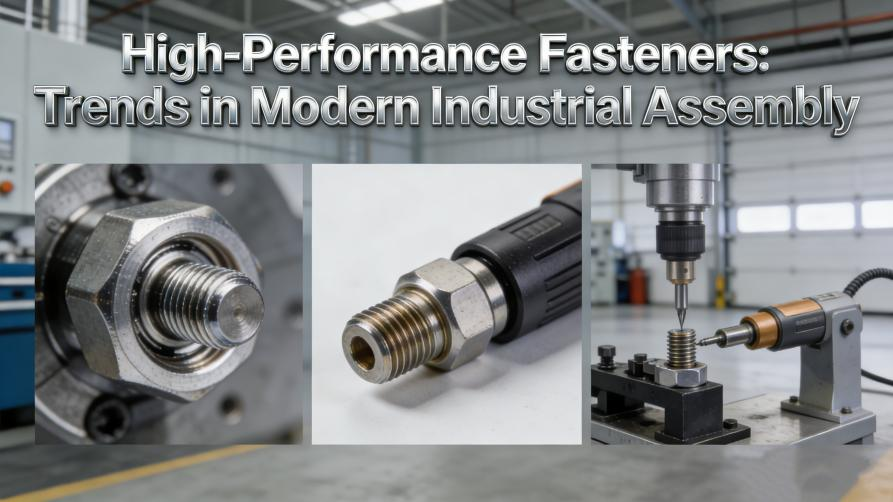
Modern industrial assembly is facing increasingly demanding requirements: enterprises need to achieve higher efficiency with fewer resources, while coping with greater loads, harsher working conditions, more precise tolerances, and shorter production cycles. These changes are redefining the value of high-performance fasteners — focusing not only on strength and corrosion resistance, but also on installation speed, consistency, and verifiability.
For the manufacturing and infrastructure industries in the Eurasian regions, the core question has shifted from “which fastener to choose” to “which material, coating, tool, and inspection system can meet requirements with the lowest life-cycle risk”.
The selection of fastener strength is no longer a simple comparison of performance grades. Engineering teams comprehensively evaluate joint reliability from multiple dimensions, including preload stability, fatigue performance, embedment loss, and the impact of surface treatment. ISO mechanical performance standards remain fundamental, but must be applied together with application verification and installation specifications.
In key industries such as heavy machinery, transportation equipment, energy, and electric power, fasteners are no longer regarded as ordinary standard parts. Their quality and precision directly determine production risk and stability, making them a critical part of cost and quality control for businesses.
Anti-corrosion coatings have also evolved from basic rust prevention to a key factor in life-cycle cost. High-strength fasteners now pay greater attention to hydrogen embrittlement risk and process control, and zinc flake coating systems have become the industry mainstream, with relevant ISO and ASTM standards providing reliable support for applications.
Meanwhile, eco-friendly, PFAS-free functional coatings are gradually becoming a trend, affecting supply chain stability and product compliance. In the EAEU region, coatings are also directly related to EAEU technical regulations and market access, making suppliers’ technical documentation and testing capabilities particularly important.
Improvements in assembly efficiency no longer depend on manual experience, but on systematic solutions such as error-proofing, traceability, torque-angle control, and sensor-equipped tools. Standards including ISO 16047 provide a unified basis for torque-clamp force testing, ensuring consistent tightening performance and stability across different fastener and coating combinations.
Gonuo specializes in the production of non-standard fasteners. If you have any needs for customized fasteners, please feel free to contact us. We will provide you with professional solutions.