T-Bolt Compatibility Fundamentals for Aluminum Tracks
Matching T-Bolt Geometry to T-Slot Profiles: Width, Radius, and Flange Angle
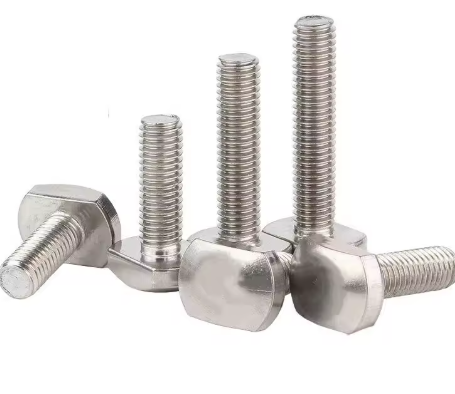
Getting the dimensions right between T-bolt heads and aluminum extrusion profiles is really important for keeping track systems from failing mechanically. The width of the bolt head needs to be somewhere around half a millimeter to one millimeter smaller than the slot opening itself. This allows the bolt to rotate smoothly but still stay fully engaged with the profile. When it comes to those radius measurements, they need to line up pretty closely with what's called the undercut curvature on the track, usually measuring between one and three millimeters. This helps spread out the shear forces across the whole flange area instead of concentrating them in one spot. The angle of those flanges matters too. If we're talking about angles ranging from forty-five degrees all the way up to ninety degrees, these numbers have a big impact on how well loads get transferred through the system. When there's a mismatch here, it creates these hotspots where stress builds up quickly, leading to faster deformation of the track over time. Take for example when someone installs a ninety degree flange bolt into a forty five degree slot opening. What happens? Stress gets concentrated right at those corner points, which can cut down the effective load capacity by as much as forty percent according to various structural tests conducted in the field.
Why 'M6' or 'M8' Labels Are Misleading: Dimensional Variability Across 2020, 3030, and 4080 Profile Series
The thread sizes we see marked as M6 or M8 really just tell us about the shank diameter, nothing about how the bolt head actually fits into different T-slots. Take an M8 t-bolt for instance it might have a 12mm head for smaller 2020 extrusions, but switch to 15mm or even 18mm heads when made for larger 3030 or 4080 profiles. Why does this happen? Because those slots themselves get bigger as the profile size increases. The 2020 slots are typically around 6.5mm wide while the much larger 4080 slots come in at about 12.5mm. Some manufacturers aren't making things any easier either, using the same thread designation labels for bolts that simply won't fit together. Before installing anything, always check these three critical measurements: make sure there's enough space between the bolt head and slot walls (aim for within 0.2mm), confirm the curved part of the head matches the slot's undercut shape, and double check that the flat surface on the bolt aligns properly with whatever it needs to attach to.
Performance-Critical T-Bolt Applications in Industrial Track Systems
Hammer Head T-Bolts in Modular Framing: Shear Strength and Vibration Resistance (ISO 16047-2022)
Hammer head T-bolts offer better strength for modular framing systems that deal with constant movement and shaking. These bolts have a flat profile with wide flanges that actually touch more of the slot surface area compared to regular fasteners, which spreads out shear forces much more evenly across connections. When looking at conveyor systems that take a lot of repeated pounding, tests following ISO 16047 standards show these special bolts can handle about 40 percent more stress cycles before breaking down. What makes them really stand out is how well they stay tight even when things get shaky. This matters a lot on packaging lines where machines run nonstop. The big difference? Fewer unexpected breakdowns from loose bolts. Some facilities report cutting unplanned maintenance stops by around two thirds after switching to these specialized fasteners.
T-Bolts for Solar Rail Mounting: Corrosion Resistance, Wind-Load Compliance (IEC 61215-2), and A2/A4 Stainless Selection
When it comes to solar rail mounting, the T-bolts need to withstand years of harsh weather conditions and strong winds. Tests according to IEC 61215-2 standards indicate that standard 304 (A2) stainless steel bolts can handle wind gusts up to 150 mph without bending when used with matching rails. However, things get tricky near coastlines or in marine environments where saltwater causes problems. That's why installers must switch to the higher grade 316 (A4) stainless steel to fight off corrosion from chlorides. Getting the thread engagement right matters too. The threads need at least 1.5 times the bolt's diameter engaged properly to resist uplift forces from wind. Field data shows that almost two thirds of failures in solar tracking systems happen because technicians didn't apply enough torque during installation. To meet regulations and ensure these systems last for years, professionals working on A4 stainless T-bolts should always use torque wrenches that have been officially certified and set exactly according to what the manufacturer specifies.
Selecting the Right T-Bolt: Thread, Material, and Installation Trade-offs
Picking the right T-bolt involves looking at thread specs, material properties, and what actually works during installation. Stainless steel options (grades A2 and A4) stand out because they resist rust so well, which makes them essential for things like mounting solar panels outdoors where weather takes its toll. Carbon steel bolts are cheaper alternatives that work great indoors when there's not much moisture around. The thread pitch really does matter too. Fine threads like M8×1.25 hold up better against vibration compared to coarser ones such as M8×1.5, especially in places where equipment gets shaken a lot. Getting the installation torque just right is important stuff. If someone tightens beyond what's recommended, it can bend those soft aluminum tracks we commonly see. But if it's too loose, the whole joint becomes weak and might fail completely. Most engineers know this stuff already but still need to think about costs versus quality. Stainless steel will set back the budget by about 20 to 30 percent more than regular carbon steel, plus working with fine threads needs special tools to prevent cross threading issues. When dealing with wind loads on solar arrays according to standards like IEC 61215-2, using A4 stainless T-bolts along with proper torque wrenches gives peace of mind regarding both long term durability and meeting safety requirements.
FAQ Section
What is the importance of T-bolt compatibility in aluminum tracks?
The compatibility of T-bolts ensures that track systems function correctly, preventing mechanical failure. Proper dimensions between T-bolt heads and extrusion profiles prevent stress concentration and potential deformation.
Why are M6 or M8 labels misleading for T-bolts?
These labels indicate the shank diameter but don't specify head dimensions, which can vary for different profiles like 2020, 3030, or 4080, affecting proper fitment in T-slots.
What makes Hammer Head T-bolts suitable for industrial applications?
Hammer Head T-bolts have a design that maximizes flange contact, improving shear strength and vibration resistance, especially beneficial in modular framing and conveyor systems.
Why are A4 stainless T-bolts preferred for solar rail mounting?
A4 stainless T-bolts offer superior corrosion resistance and compliance with standards, critical for solar installations in challenging environmental conditions.