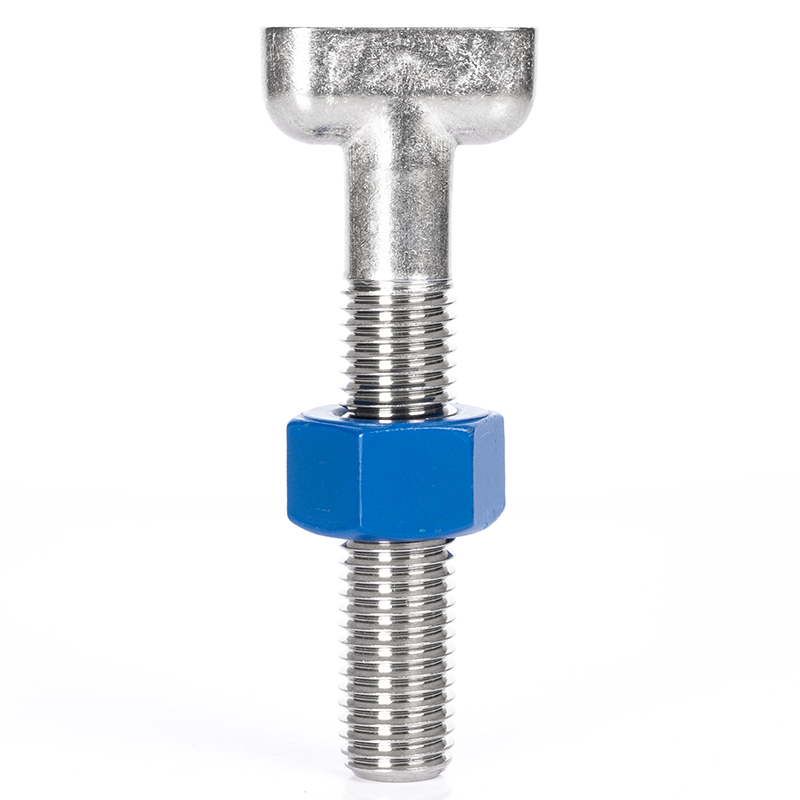
T Bolts in CNC and Precision Milling Machinery
T-slot table integration for repeatable, tool-free workholding on machining centers
T slot tables are really important in precision machining shops because they let T bolts slide into those standard grooves so workpieces can be clamped securely without needing extra tools. The whole system keeps things lined up pretty accurately too, about plus or minus 0.01 mm from one batch to another. That kind of consistency matters a lot when working on parts that need super tight tolerances. According to some recent studies from Machining Efficiency Benchmarks back in 2024, setup times actually go down around 65% compared to old fashioned bolted fixtures. Plus workers can move pieces around quickly between different operations. When companies stop relying on all those custom made fixtures, they gain a lot more freedom to handle complicated shapes like turbine blades or even medical implants. Best part is they don't lose any strength or stability during fast milling processes or when doing heavy cuts either.
Performance advantages of t bolt fasteners: vibration resistance, rapid reconfiguration, and high clamping force retention
Three interdependent attributes define t bolt performance in precision environments:
- Vibration resistance: Serrated flange designs retain 98% of initial clamping force under sustained G-forces typical of high-feed milling
- Rapid reconfiguration: Modular setups enable full fixture changes in under 90 seconds�versus 15+ minutes for welded alternatives
- Force retention: Heat-treated alloy variants sustain 12,000 PSI clamping pressure without plastic deformation, essential for aerospace composite layups where consistent pressure prevents voids
This combination supports dimensional stability over extended production cycles and accommodates just-in-time scheduling shifts. Independent testing confirms t bolt-secured workpieces exhibit 78% less displacement during aggressive machining than those held with conventional clamps.
Clamping Performance Comparison (CNC Applications)
| Metric | T Bolt Systems | Traditional Clamping | Improvement |
|---|---|---|---|
| Reconfiguration Time | � 90 seconds | 15+ minutes | 90% faster |
| Vibration Displacement | 0.02mm max | 0.09mm average | 78% less |
| Force Retention (100hr) | 98% | 74% | 32% better |
T Bolts for Flexible Automation and Robotic Workcell Assembly
Enabling modular, reprogrammable fixturing in collaborative robot cells and transfer lines
T bolts form the backbone of scalable automation systems, particularly when it comes to creating those modular setups that can be reprogrammed on demand within collaborative robot cells and transfer lines. What makes them so valuable is their ability to let engineers tweak workcell configurations quickly as production needs shift around, all without needing to break out welders, drills, or any special tools for the job. The serrated flange design really stands out too since it keeps everything clamped tight even during intense motion and constant vibration cycles, which means no slipping occurs during robotic part handling or when moving parts between pallets. Manufacturers report seeing downtime reductions somewhere in the neighborhood of 40% compared to traditional fixed welded fixtures, making these bolts especially useful for facilities dealing with small batch sizes, mixed product runs, or JIT operations. And because they fit into standard T-slot framing systems across the board, automation cells built with T bolts stay flexible enough to handle everything from initial prototype testing right through to full scale manufacturing without major overhauls down the road.
Cross-Industry Validation: Automotive, Aerospace, and Heavy Equipment Applications
T Bolt Use Cases in Automotive Jigs and Aerospace Composite Layup Fixtures Requiring Zero-Tolerance Repeatability
T bolts play a critical role in automotive manufacturing by anchoring those precision jigs that require alignment within just 0.005 inches or better. The special clamping action these bolts provide actually stops fixtures from drifting around when machines are running at high speeds on engine blocks and other structural parts of the car frame. Some major suppliers have seen their need for rework drop by about 19% after switching to this system. Moving over to aerospace applications, T bolts hold down composite layup tools used for making wing skins and sections of airplane bodies. These bolts apply consistent pressure across the entire surface, which helps balance out differences in how materials expand when heated. Carbon fiber pre-pregs and metal molds tend to react differently to temperature changes, but the right T bolt setup handles this problem effectively. Even under massive stress conditions, a standard T bolt configuration can handle up to 12,000 pounds per square inch without bending or breaking. That kind of strength makes sure there are no gaps or bubbles in the final laminate layers of modern aircraft structures.
Manufacturers of heavy machinery often turn to T bolts when building welding fixtures for things like excavator booms and crane arms. These setups need frequent adjustments since they handle small production runs with lots of different parts. Real world testing indicates that using T bolts cuts down on fixture setup time by about 30% compared to older bolt systems. This makes switching between jobs much faster in expensive manufacturing environments. The precision offered by T bolts matters across many industries too. When components must be made consistently within tight tolerances, these bolts help maintain quality standards while also meeting safety requirements and keeping operations running smoothly day after day.
Material and Design Considerations for Optimal T Bolt Performance
Matching t bolt grade, thread type, and head profile to aluminum extrusions vs. cast iron machine tables
Choosing the right T-bolt involves finding the sweet spot between material characteristics, what kind of loads it needs to handle, and how it interacts with the base table surface. For everyday applications where budget matters most, carbon steel bolts work well enough. When dealing with moisture or harsh chemicals though, stainless steel becomes necessary because it won't rust away over time. Aerospace engineers typically go for heat treated alloy steels since these materials pack impressive strength without adding much weight, making them ideal for tools subjected to repeated stress cycles in demanding conditions.
Machine table material dictates critical design adaptations:
| T Bolt Feature | Aluminum Extrusions | Cast Iron Tables |
|---|---|---|
| Head Profile | Wider bearing surface | Standard head design |
| Thread Type | Coarse threads (minimizes galling) | Fine threads (maximizes clamp load) |
| Grade | Grade 5 (moderate tensile strength) | Grade 8 (high tensile strength) |
When working with aluminum tracks, flange style T bolts help spread out the torque so it doesn't damage the surface. Meanwhile, hardened steel bolts coated with phosphate stand up better against fretting wear when applied to cast iron surfaces. Look at those vibration heavy automation cells though - serrated flange nuts there can hold about 92% of their original clamping power even after going through multiple thermal cycles according to Fastener Tech International from last year. Getting all these factors right helps reduce material fatigue over time and keeps things positioned accurately for thousands upon thousands of machining operations without drifting off course.
Frequently Asked Questions
What are the main advantages of using T bolts in CNC machining?
T bolts facilitate quick and secure clamping of workpieces without additional tools, offer excellent vibration resistance, rapid setup reconfigurations, and maintain high clamping force retention, enhancing precision and efficiency.
How do T bolts contribute to automation in manufacturing?
They allow for modular and reprogrammable setups in collaborative robot cells and transfer lines, enhancing flexibility and reducing downtime without compromising on clamping stability.
Are T bolts suitable for different industries?
Yes, T bolts are utilized across various industries such as automotive, aerospace, and heavy equipment, particularly where precision, strength, and repeatability are crucial in manufacturing processes.