Understanding Load Bearing Capacity and Its Importance in U Bolts
Definition and Importance of Load Bearing Capacity in U Bolts
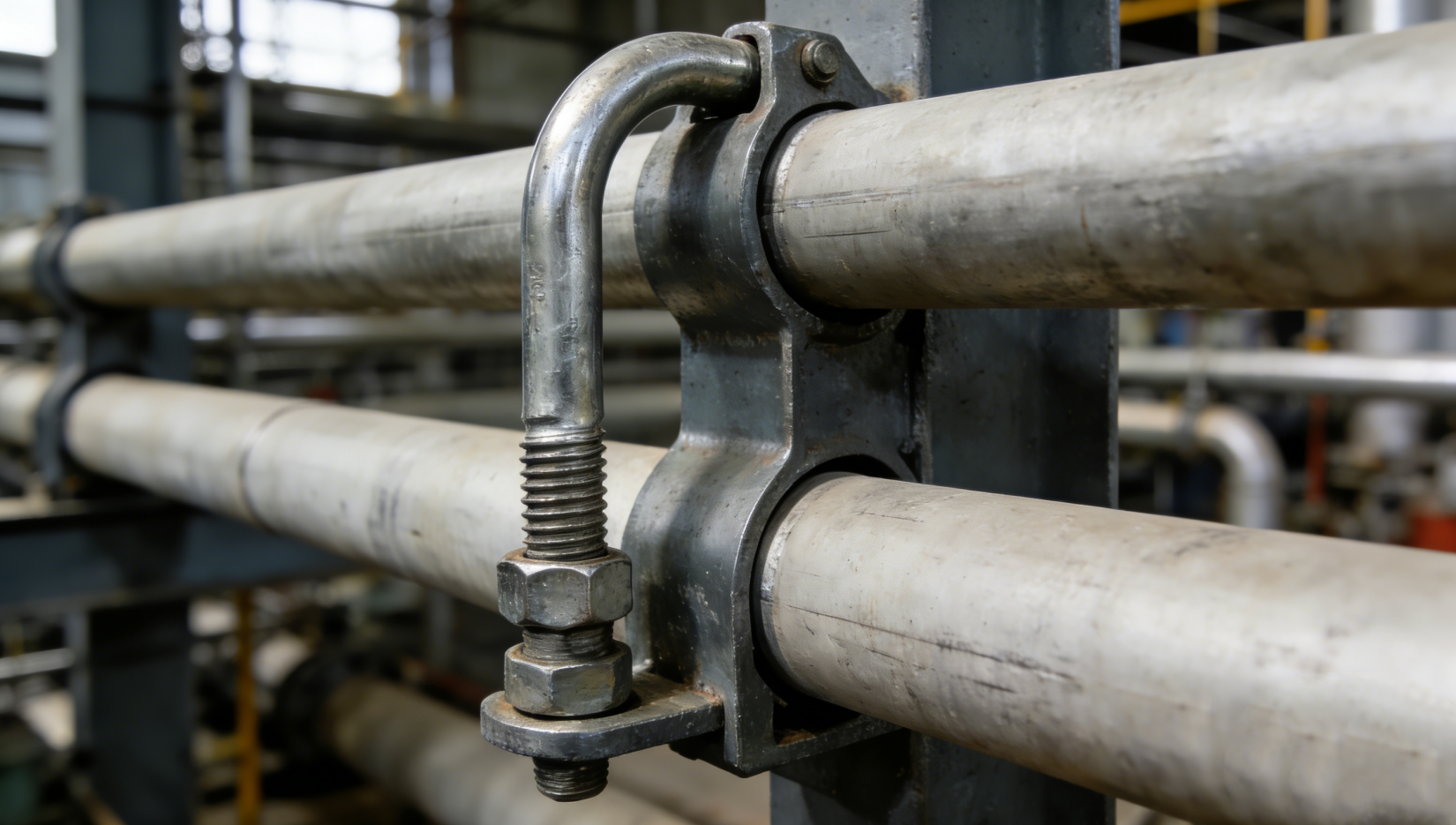
The load bearing capability of a U bolt basically tells us how much weight it can hold before bending out of shape, which makes these components absolutely critical when securing pipes that transport liquids or gases under pressure. According to some recent tests published by ASME in their 2023 Pressure Vessel Standards document, round cross section U bolts actually handle about 27 percent more stress compared to those made from flat bars. This happens because of something called plastic section modulus differences between shapes. What this means practically is that round U bolts tend to bend slowly over time instead of snapping all at once, giving operators valuable warning signs before catastrophic failures occur in industrial pipe networks across manufacturing facilities worldwide.
Load Requirements and Strength Ratings for Reliable Pipe Support
The load needed really comes down to two main factors: what size the pipe is and how much pressure it's handling. Take a standard 2 inch schedule 40 steel pipe for example. Grade 8 alloy U bolts used here can handle around 150 ksi of tensile strength. That makes them roughly 42 percent stronger compared to regular grade 5 bolts which most folks still use. Most industry guidelines actually require maintaining a safety margin of about four times between the maximum strength a bolt can take before breaking (called UTS) and what we consider safe working load (SWL). This kind of buffer helps systems withstand those unexpected pressure surges that happen all the time in places like HVAC installations and chemical processing plants where things get pretty intense sometimes.
Stress Distribution in U Bolt Configurations
| Cross Section Type | Vertical Load Capacity | Horizontal Load Capacity |
|---|---|---|
| Circular (Solid) | 8,200 lbf | 5,700 lbf |
| Flat Bar | 6,450 lbf | 3,900 lbf |
U bolts exhibit directional load dependence: vertical forces distribute evenly across both legs, while horizontal loads induce torsional stress at the bend apex. The 2023 study revealed 37% faster fatigue crack propagation under cyclic horizontal loading, highlighting the importance of correct orientation during installation.
Determining Safe Working Load (SWL) for U Bolts in Piping Systems
Accurately determining the Safe Working Load (SWL) ensures reliable performance in critical piping applications by integrating engineering principles with industry standards.
Factors Influencing Safe Working Load of U Bolts
Material composition, bolt diameter, thread design, and environmental conditions directly affect SWL. A 2024 ASME B31.3 report found U bolt failure rates increase by 18% when temperatures exceed 300°F. Engineers must also account for dynamic loads, installation torque tolerances (±15% per ASTM F1554), and cyclic stress patterns.
Calculating SWL Based on Material Grade and Diameter
The formula SWL = (Material Yield Strength – Cross Sectional Area) / Safety Factor provides a baseline. A 1" diameter Grade 316 stainless steel U bolt with a 2.25:1 safety factor typically achieves 12,800 lbs SWL—compared to 8,400 lbs for Grade 5 carbon steel. These calculations should be verified against ASTM A193 specifications in high pressure systems.
Case Study: SWL Variations Between Carbon Steel and Stainless Steel U Bolts
In offshore pipeline restraints, 316L stainless steel U bolts retained 32% higher SWL after 5,000 hours of salt spray exposure compared to galvanized carbon steel. However, carbon steel remains cost effective in lower temperature ranges (<150°F).
Standardized Testing Protocols for SWL Certification
Manufacturers validate SWL through rigorous testing aligned with ASME PCC 1 guidelines, including:
- Hydrostatic pressure testing at 150% SWL
- X ray weld inspection (AWS D1.1 standards)
- Cyclic load testing (minimum 10,000 cycles)
These protocols ensure bolted joint integrity in pressurized systems.
Structural Performance of U Bolts Under Dynamic and Environmental Loads
Load Bearing Capacity Under Horizontal and Vertical Loads
The way U bolts react to different stress directions matters a lot in engineering applications. When dealing with vertical forces, these fasteners rely on their tensile strength properties. Research from Song and colleagues back in 2020 found that round cross section designs actually perform better under tension, offering about 18 to maybe even 23 percent greater resistance before yielding compared to flat bar versions. Things get complicated when horizontal forces come into play though. These create bending stresses, and if the threads aren't properly engaged, the bolt's capacity drops dramatically in earthquake simulations sometimes as much as 40%. For engineers trying to predict how these components will behave when subjected to multiple load types at once, especially after they start deforming plastically past their yield point, non linear analysis becomes absolutely necessary for accurate modeling.
Impact of Vibration and Thermal Cycling on U Bolt Integrity
When metal parts are constantly vibrating, they tend to wear out much faster than expected. Research indicates that stainless steel U bolts lose about two thirds of their normal lifespan if subjected to vibrations exceeding 25 Hz frequency levels. The problem gets worse with temperature changes too. When there's a swing of around 100 degrees Celsius, those little cracks start forming in zinc plated carbon steel bolts at roughly three times the rate compared to what happens when things stay still. Some coatings can make a big difference though. Zinc nickel alloy coatings have been shown to hold off corrosion for well over 1,000 extra hours in salt spray testing environments. This matters because it helps maintain proper tension on fasteners even as materials expand and contract with changing temperatures throughout the day.
Enhancing Structural Resilience in Seismic Zones
The seismic grade U bolts have bigger thread root radii, about 35 to 50 percent larger than regular ones, which helps cut down on stress points. They also use special alloys that are roughly 12 to 15 percent more ductile compared to standard materials. Testing at full scale has demonstrated something pretty impressive these bolt designs can actually take in around 78 percent more energy when there's sideways movement happening. And interestingly enough, when we combine them with flexible base plates along with those torque limiting nuts, they still hold onto more than 90 percent of their original tension even after going through simulations of a magnitude 7.0 earthquake event.
Evaluating Long Term Durability in Harsh Operating Conditions
When exposed to the atmosphere, materials show quite different lifespans. For instance, carbon steel U bolts tend to start showing pitting corrosion after just 18 months near coastlines, while AISI 316 stainless steel can last well beyond eight years according to Daniel's research from 2023. When companies pair good material choices with protection methods like zinc flake coatings or PVC sleeves, they see service life improvements of around four times what it would be otherwise in chemical plant settings. Tests that speed up the aging process have found something interesting too smoother surfaces with roughness values below 3.2 micrometers actually slow down crack growth by about 30% when subjected to repeated stress cycles. This kind of information helps engineers make better decisions about maintenance schedules and replacement timelines.
Common Failure Modes and Ultimate Strength Limits of U Bolts
Common Failure Modes in U Bolts Used for Pipe Restraints
U bolts typically fail due to shear overload (35% of cases), material fatigue, or stress corrosion cracking. Horizontal loads exceeding 8 kN often cause thread stripping in carbon steel variants (Berrion Wu 2023). In offshore installations, acidic condensation degrades protective coatings 3.7 times faster than in controlled settings, accelerating failure.
Plastic vs. Elastic Deformation Under Excessive Load
When U bolts exceed their yield point (typically 60–70% of ultimate strength), they shift from elastic stretching to permanent plastic deformation. Finite element analysis shows stainless steel U bolts retain 82% load bearing capacity post yield under seismic vibrations, while carbon steel cracks at just 15% plastic strain.
Ultimate Tensile Strength and Yield Point Analysis
Grade 8 alloy U bolts achieve 150 ksi ultimate tensile strength—24% higher than Grade 5 bolts—making them ideal for high vibration pipelines. The yield to tensile ratio (e.g., 0.85 for A193 B7 steel) influences failure progression; lower ratios allow visible deformation, providing warning before catastrophic failure.
Addressing the Gap Between Field Performance and Lab Test Data
Field failures occur 42% more frequently than lab predictions, largely due to improper torque application—fewer than 15% of installers use calibrated tools. To close this reliability gap, experts recommend combining digital twin simulations with biannual torque inspections.
Best Practices for Selecting and Installing U Bolts in Piping Applications
Matching U Bolt Design to Specific Piping Load Demands
Getting the right U bolt means making sure it fits both what the system needs to handle and the actual size of the pipes involved. When dealing with those constant vibrations found in things like HVAC setups, most engineers go for thread rolled versions constructed from tougher materials because they help spread out the stress better over time. Research published in the 2024 Pipe Support Analysis indicates that U bolts made from 316 stainless steel can take on about 35 percent more repeated loading compared to regular galvanized carbon steel ones when exposed to salt water conditions. Material choice matters a lot here since different environments demand different levels of durability and resistance to corrosion.
- Axial vs. lateral loads: Oval shaped U bolts provide better weight distribution for horizontal runs
- Temperature ranges: Materials must maintain yield strength within ±20°F of design specs
- Future maintenance needs: 65% of premature failures stem from inaccessible bolt heads, according to industrial reports
Proper Sizing, Spacing, and Torque Specifications
Correct sizing prevents slippage and over clamping. Recommended guidelines are:
| Pipe Diameter (in) | Minimum Rod Diameter (in) | Torque Range (ft lbs) |
|---|---|---|
| 2 4 | 0.375 | 15 20 |
| 6 8 | 0.5 | 25 35 |
| 10 12 | 0.625 | 40 50 |
Multiple U bolts should be staggered at 1.5x pipe diameter spacing to avoid stress accumulation. Calibrated torque wrenches are essential—hand tightened installations fail 83% faster in vibration tests (Piping Systems Journal 2022).
Industry Best Practices for Secure Pipe and Tube Support
Three proven techniques improve U bolt performance:
- Anti abrasion pads: Reduce friction induced pipe wear by 62%
- Double nut configurations: Prevent self loosening in dynamic applications
- Annual torque checks: Maintain over 90% of initial clamping force over five years
Material Selection and Corrosion Resistance Considerations
Environmental conditions drive material selection for long term reliability:
| Environment | Recommended Material | Service Life Expectancy |
|---|---|---|
| Marine | 316 Stainless Steel | 25+ years |
| Chemical Plants | Alloy 20 | 15 20 years |
| Indoor HVAC | Hot Dip Galvanized Steel | 10 15 years |
Electroplated zinc degrades five times faster than mechanically galvanized coatings in humid conditions. For critical systems, specify third party certified materials meeting ASTM A153 or ISO 1461 standards.
Table of Contents
- Understanding Load Bearing Capacity and Its Importance in U Bolts
- Determining Safe Working Load (SWL) for U Bolts in Piping Systems
- Structural Performance of U Bolts Under Dynamic and Environmental Loads
- Common Failure Modes and Ultimate Strength Limits of U Bolts
- Best Practices for Selecting and Installing U Bolts in Piping Applications