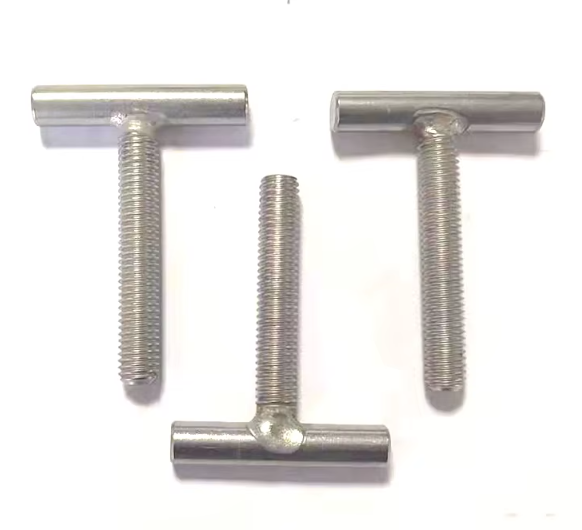
Precision Fixturing on CNC and Milling Machines
How T-Bolts Enable Zero-Slip Positioning on T-Slotted Tables
The inverted T shape of T-bolts helps stop workpieces from slipping because they fit snugly into those vertical slots on machine tables. Standard hex bolts just depend on friction to hold things in place, but T-bolts have this flat part at the bottom that actually wedges against the inside of the slot. This spreads out the pressure sideways instead of letting it concentrate in one spot, so there's less tiny movement when machines are running at speed. The result? Position stays accurate within about 0.01 mm, and vibrations cause 63% less bending in tools compared to regular bolts. For companies making parts for airplanes, this means surfaces can be finished smoother than 0.4 microns roughness average, which meets those tough specs required for aerospace applications.
Case Study: M8 T-Bolt Mounting on Rotary Tables (12.4 kN Axial Load)
M8 T-bolts can handle pretty serious forces in high torque rotary setups, standing up to around 12.4 kN or roughly 1,265 kg before showing any signs of bending. The clearance between the shank and slot stays below 0.15 mm which makes all the difference when it comes to getting that perfect Z-axis alignment and cutting down on side to side movement. When put through their paces at 8,000 RPM during milling work, these bolts kept everything stable with just 0.003 mm runout. What's even better is how they cut torque loss by almost two thirds after running non stop for 48 hours straight. This kind of performance means manufacturers can keep producing automotive gears within those tight ±0.025 mm specs without constant interruptions.
Rapid Modular Assembly with Adjustable T-Bolt Systems
Adjustable T-bolt systems let engineers reconfigure machinery setups in under 15 minutes—52% faster than traditional welding methods. Standardized components slide along T-slotted profiles, enabling tool-free adjustments for diverse part geometries and production volumes.
Fine Z-Axis Leveling via T-Bolt Shank Tolerance (±0.15 mm)
The ±0.15 mm shank tolerance of precision T-bolts allows micro-adjustments for Z-axis leveling, eliminating the need for shims and supporting vertical positioning increments as fine as 0.05 mm. When paired with serrated flange nuts, the system holds alignment under 9 kN lateral loads without slippage—essential for micron-level CNC machining accuracy.
Real-World Use: Reconfigurable Jigs and Tooling Plates in Job Shops
High-mix job shops leverage T-bolt versatility to:
- Reduce jig changeover between production runs to an average of 23 minutes
- Modify tooling plates for parts ranging from 50–500 mm
- Build vibration-dampening fixtures that cut workpiece chatter by 41%
This flexibility cuts non-productive time by 34% annually while supporting custom orders without dedicated, permanent fixtures.
Vibration-Resistant Workholding on T-Slotted Workbenches
Self-Locking Friction Interface: How T-Bolts Reduce Torque Decay by 63%
When machining processes get going, those annoying vibrations can really mess things up. They lead to tool deflection, create surface inaccuracies, and eventually cause dimensional drift problems. That's where T-bolts come in handy. These special fasteners work differently from regular ones because of their unique design. The trapezoidal head actually wedges itself against the sides of the T-slot when tightened, creating extra resistance against sideways movement even when loads change dynamically. Some independent tests back this up too. According to a recent report from Machinery Dynamics in 2023, these specialized bolts cut down on torque loss by around 63% compared to standard bolts. This means they hold their grip much better during intense operations such as milling hardened steel parts. Getting them right though takes attention to detail. Make sure the bolt grade matches what's in the slot, and don't forget proper torque application. This isn't just about following specs either. Applying too much force risks damaging the slot itself, while too little undermines the whole point of using these vibration dampening features in the first place.
Material-Specific T-Bolt Selection and Torque Guidelines
Aluminum vs. Steel T-Slots: Matching T-Bolt Grade (A2-70 – A4-80) and Clamping Torque
Aluminum T-slots are softer compared to other materials and tend to deform when threads get damaged, so they need less force when tightening. Using A2-70 stainless steel T-bolts works well because these bolts provide enough strength even when tightened less aggressively, reducing chances of stripping out completely. For hardened steel slots though, things change a bit. These can handle much more stress and work best with A4-80 grade bolts that resist rust while maintaining their shape even under high torque settings without harming the slot itself. Don't forget to check those standard torque charts for specific sizes before proceeding. Too much pressure on aluminum could lead to complete failure, but not enough on steel means fixtures won't stay rigid during operation and vibrations might cause problems down the line. Taking care to match materials properly really pays off in longer lasting equipment, consistent results between setups, and fewer headaches when working through different machining scenarios.