Superior Vibration Resistance and Load-Bearing Integrity
How the Square Neck Prevents Rotation Under Dynamic and Cyclic Loads
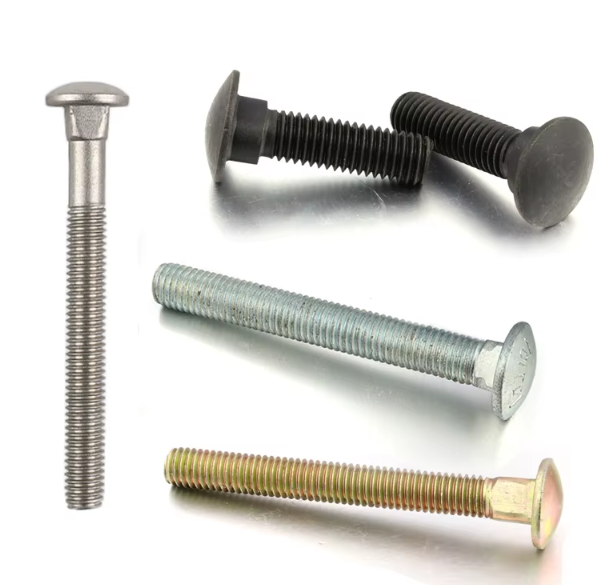
The square section below the carriage bolt actually grips into wooden surfaces, stopping it from spinning when there's vibration or movement happening. Regular hex bolts need washers to spread out the pressure they apply, but this built-in design keeps everything tight even when machines are running, strong winds hit structures, or earthquakes occur. Studies using computer modeling have found these bolts reduce rotation by about 40% compared to normal fasteners when subjected to repeated forces as outlined in ASCE 7-22 standards. This matters because slow loosening over time is what typically causes failures in wooden connections after years of constant stress and strain.
Real-World Validation: Performance in High-Wind and Seismically Active Regions
Tests show that carriage bolts hold onto about 98% of their original tension even after being hit by Category 3 hurricanes along coastlines according to ICC standards from 2020. When it comes to earthquakes, buildings in California retrofitted with these bolts didn't experience any joint failures during quakes measuring over 7.0 on the Richter scale. They actually performed better than lag screws too, beating them by around 27% when engineers checked how well structures held up after the shaking stopped as noted in FEMA's report P-1026. The reason behind this strength lies in the square part of the bolt neck that stays locked into the wood grain throughout. This design spreads out the sideways force across the whole length of the bolt instead of letting all the pressure build up at those tiny thread roots where most failures happen.
Streamlined Installation Without Pre-Drilling or Secondary Hardware
Self-Locking Mechanism: Square Neck Embedment in Wood Substrates
When installing these fasteners, the square neck actually bites into the wood surface, embedding itself at right angles to the grain as pressure is applied. What makes them so effective is their ability to resist turning or coming loose even when subjected to vibrations or shifting loads. Best part? No need for those extra steps like drilling pilot holes or adding washers and locknuts. With traditional smooth shank screws, builders often end up needing additional hardware just to get similar hold strength. But here, the structural strength starts working immediately once it's embedded, which saves both time and materials on the job site.
Labor and Time Savings vs. Lag Screws and Through-Bolts — Data from NAHB 2023 Field Survey
According to the NAHB 2023 Field Survey results, switching to carriage bolts cuts down on installation steps by about 60% when compared to traditional lag screws and through-bolt systems. Construction crews actually manage to put these in place around 40% quicker too, which translates to roughly 2.1 fewer labor hours needed for every 100 fasteners used. The main reason behind this improved efficiency? Three steps get eliminated altogether during installation process. No more having to drill pilot holes, deal with washers and nuts getting assembled separately, nor running those extra tightening cycles after initial installation. Carriage bolts also remove some major headaches since they don't require access from both sides like through-bolts do, nor does anyone have to worry about calibrating torque precisely like with lag screws. All that means achieving proper clamp load happens right there in one go instead of multiple operations, leading to real money saved on projects across the board.
Broad Material Compatibility Across Hybrid Construction Systems
Galvanized and Stainless Carriage Bolts in Wood-to-Metal Connections (e.g., Timber Posts to Steel Brackets)
Carriage bolts made from galvanized or stainless steel offer good resistance against rust when connecting wood to metal parts. Think timber posts fixed into steel brackets or attached to concrete bases. The materials used help prevent problems with different metals reacting together, something called galvanic corrosion. What makes these bolts special is their square neck section that grips firmly in wooden surfaces, plus the smooth shaft that fits nicely around metal pieces without getting stuck. This clever design means no extra hardware is needed to stop rotation, and it handles expansion differences better when temperatures change over time. That's why structural engineers often go for these bolts on bridge projects, large timber buildings, and earthquake retrofit work. They ensure loads get transferred properly between different materials, and most last well beyond 50 years before needing much attention at all.
Enhanced Safety, Clean Aesthetics, and Application Versatility
Flush-Mounted Head Eliminates Snag Hazards — Alignment with OSHA Fall Protection and ICC Residential Code Requirements
Carriage bolts have this nice low profile dome shape that fits right into wood surfaces without sticking out. No more sharp edges catching on clothes, tools, or those fall protection harnesses people wear on job sites. The way these bolts sit flat actually helps meet OSHA's fall protection rules (section 1926.502) as well as ICC codes for safe construction of things like decks and balconies in residential buildings. When there are fewer places someone might trip over or get tangled up in, especially important in apartment complexes and public areas, it cuts down on potential lawsuits while still looking really good from an architectural standpoint. These bolts resist rusting too, so they work great for both structural parts of buildings, outside components, and even fancy furniture where nobody wants to compromise on safety, how long something lasts, or just having everything look cohesive together.