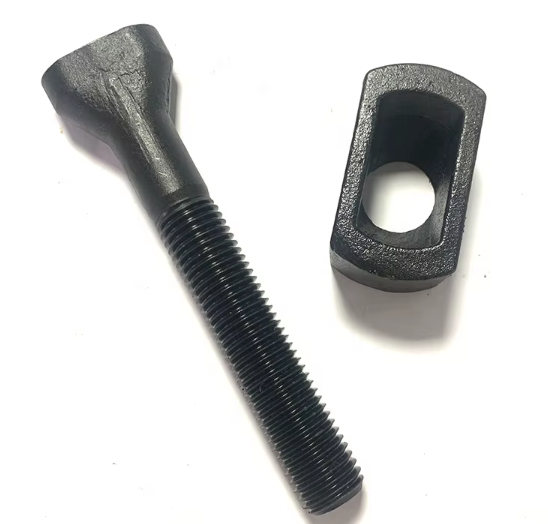
Selecting the Right Material and Heat Treatment for High Strength Bolts
Matching ASTM Standards (A325, A490, A449, A354) to Structural Load and Service Environment
Material selection is foundational to bolt performance in critical structural applications. The American Society for Testing and Materials (ASTM) provides rigorously validated standards that align mechanical properties with real-world demands:
- ASTM A325 bolts (120 ksi minimum tensile strength) are engineered for standard structural steel connections in buildings and bridges
- ASTM A490 (150 ksi minimum) delivers superior load-bearing capacity for high-stress applications such as seismic bracing and heavy equipment anchorage
- ASTM A354 Grade BD and ASTM A449 extend coverage to specialized tension-critical uses—including anchor rods and custom-engineered fasteners—where higher strength and tighter dimensional control are required
The environment where equipment operates matters just as much as anything else. For coastal areas, we need materials that resist corrosion or have protective coatings. When working in really cold places (-50 degrees Fahrenheit and below), special steels with added nickel content such as 40CrNiMo become necessary to maintain strength against cracking. A recent study from ASTM in 2023 looked at why bolts fail early, and guess what? About 37 percent of those failures happened because people picked the wrong material grades. So when choosing specifications, it's not some abstract exercise in paperwork. Getting this right actually saves lives and prevents accidents on site.
How Controlled Heat Treatment Optimizes Toughness, Ductility, and Fatigue Resistance
Heat treatment is not a finishing step—it's the metallurgical keystone that transforms raw steel into a reliable, fatigue-resistant fastener. Precision-controlled processing follows three essential phases:
- Austenitization: Heating to ~1650°F fully dissolves carbides, enabling uniform grain refinement across the cross-section
- Quenching: Rapid oil cooling locks in martensitic structure, establishing core hardness and strength potential
- Tempering: Reheating to ~800°F relieves internal stresses while optimizing the ductility–strength balance critical for dynamic loading
According to research published in the Journal of Materials Engineering back in 2022, this treatment process boosts fatigue resistance by around 60% compared to regular untreated parts. When dealing with bigger bolts over an inch in diameter, controlling how fast they cool down is really important. Without proper control, there can be differences in hardness from the outside to the inside of the bolt which weakens the whole structure. After treatment, heating them to about 400 degrees Fahrenheit helps get rid of hydrogen that gets trapped during processes like pickling or plating. This step prevents those nasty delayed fractures that can happen later on. Well tempered bolts have been shown to handle well over 100 thousand load cycles before any cracks start forming or spread through the metal.
Maximizing Corrosion Resistance Without Compromising Bolt Integrity
Evaluating Protective Coatings: Hot-Dip Galvanizing (ASTM A153), Mechanical Plating (B695), and Stainless Steel (F593)
Corrosion protection must never come at the expense of mechanical integrity. Each coating system serves distinct environmental and performance mandates:
- Hot-dip galvanizing (ASTM A153) applies a thick, sacrificial zinc layer ideal for atmospheric exposure—but rapidly depletes in continuous marine immersion, limiting its suitability to above-water or intermittently wet zones
- Mechanical plating (ASTM B695) deposits zinc at low temperatures (<150°F), eliminating hydrogen embrittlement risk while delivering consistent coverage on complex geometries and small-diameter fasteners
- Stainless steel fasteners (ASTM F593)—especially 316-grade—offer inherent, maintenance-free corrosion resistance in aggressive chemical or full-submersion saltwater environments, though at a 40–60% material cost premium
Selection hinges on lifecycle context—not just upfront price. The table below summarizes key trade-offs:
| Coating Type | Environmental Suitability | Strength Impact | Cost Efficiency |
|---|---|---|---|
| Hot-Dip Galvanizing | Atmospheric zones only | May reduce fatigue strength by 15%¹ | Lowest upfront cost |
| Mechanical Plating | Moderate splash/spray exposure | Maintains base metal strength | Mid-range pricing |
| Stainless Steel | Fully submerged/corrosive zones | Zero strength compromise | Highest lifetime value |
¹Based on ASTM F606 testing benchmarks
Preserving Thread Functionality While Ensuring Coating Adhesion and Uniform Coverage
The thickness of coatings plays a big role in how reliable installations turn out. When there's too much zinc from hot dip galvanizing, it can mess with the shape of threads, making installation torque requirements jump as much as 25%. This increases risks like joints slipping or bolts breaking under stress. Getting the surface ready properly through methods like abrasive blasting or chemical etching isn't optional if we want good adhesion without messing up the thread profiles. Testing with salt spray according to ASTM B117 standards shows that when coverage reaches at least 85% around those critical thread roots, field failures drop dramatically by about 80%. With mechanical plating processes, controlling how much material gets deposited is crucial to avoid clogged threads. Stainless steel fasteners present their own challenges requiring special anti-galling lubricants such as molybdenum disulfide to maintain proper thread engagement when tightening components together.
Ensuring Installation Accuracy to Prevent Premature Failure of High Strength Bolts
Torque-Tension Dynamics, Lubrication Consistency, and Calibration Protocols
When it comes to securing joints properly, what really matters isn't the torque reading but the actual preload achieved. The relationship between torque and tension reveals something important: most of what we apply gets lost to friction. Studies indicate around 90% of torque disappears into overcoming friction before anything actually tightens the joint. And here's where things get tricky. If lubrication varies even slightly across different parts, then identical torque values might result in tension differences of about plus or minus 30%. That kind of inconsistency makes all those torque specs basically meaningless. This is why many professionals swear by certified anti seize products. When these compounds are spread evenly on both the threads and contact areas, they create consistent friction conditions. This helps maintain predictable preload levels instead of relying solely on torque measurements which can be so misleading.
Proper calibration of torque tools is essential according to NIST traceable standards. These calibrations need to account for changes in temperature as well as how often the tool gets used. Tools that aren't calibrated properly can lose accuracy anywhere from 5 to 15 percent within just a few months. Field research actually shows that when workers stick to proper calibration procedures, they cut down on installation mistakes by nearly 80 percent. Combine this with good documentation about lubrication practices and everything falls into place. Bolts will reach their intended tension levels without going past their breaking point. This means stronger joints overall and better resistance to wear and tear over time in mechanical assemblies.
Protecting High Strength Bolts During Handling, Storage, and Pre-Installation
Mitigating Real-World Degradation: Moisture, Chlorides, Temperature Swings, and Surface Damage
The process of degradation actually starts long before any equipment gets installed on site. Take those high strength bolts used in construction projects along our coastlines. When left exposed to the salty air and humidity, these bolts start showing signs of surface corrosion within just a few hours after manufacturing. What's really concerning is how this early stage corrosion can cut down their tensile strength by around 30 percent even before they're ever tightened into place. The problem gets worse with chloride induced pitting which creeps in silently over time. Proper storage becomes absolutely critical here. We need to keep these materials in controlled environments where relative humidity stays below 40%, complete with vapor barriers and desiccant packs to absorb excess moisture. Temperature fluctuations matter too. When daily temps swing more than 50 degrees Fahrenheit, it puts serious strain on threaded connections through thermal fatigue. Insulated packaging helps reduce this stress during transport and storage. For outdoor applications, forget about regular plastic covers. Instead, go for UV resistant tarps that let air circulate but still keep water out. These breathable options stop condensation buildup inside while letting trapped moisture escape naturally without damaging the materials underneath.
The way we handle these components matters just as much as anything else. When using padded lifting equipment, it helps avoid those little nicks and gouges that can start all sorts of problems down the road, including corrosion and stress cracks. Any bolt that falls from over three feet high needs checking out with magnetic particle inspection before going back into service. Tests have shown that even small impacts create microscopic cracks which cut the fatigue life of bolts almost in half during controlled testing conditions. These aren't just paperwork requirements either. They actually protect against something serious - the National Association of Corrosion Engineers puts the global cost at around 740 billion dollars each year according to their 2023 report. Proper handling makes sure bolts last exactly as long as they were designed to last.
Table of Contents
- Selecting the Right Material and Heat Treatment for High Strength Bolts
- Maximizing Corrosion Resistance Without Compromising Bolt Integrity
- Ensuring Installation Accuracy to Prevent Premature Failure of High Strength Bolts
- Protecting High Strength Bolts During Handling, Storage, and Pre-Installation